Jodrell Bank – An Amazing Telescope, But How Accessible Is It?
When you think of Jodrell Bank, the first thing that probably comes to mind is the enormous Lovell Telescope. It's certainly an impressive sight, but we wanted to discover what else this famous observatory had to offer.

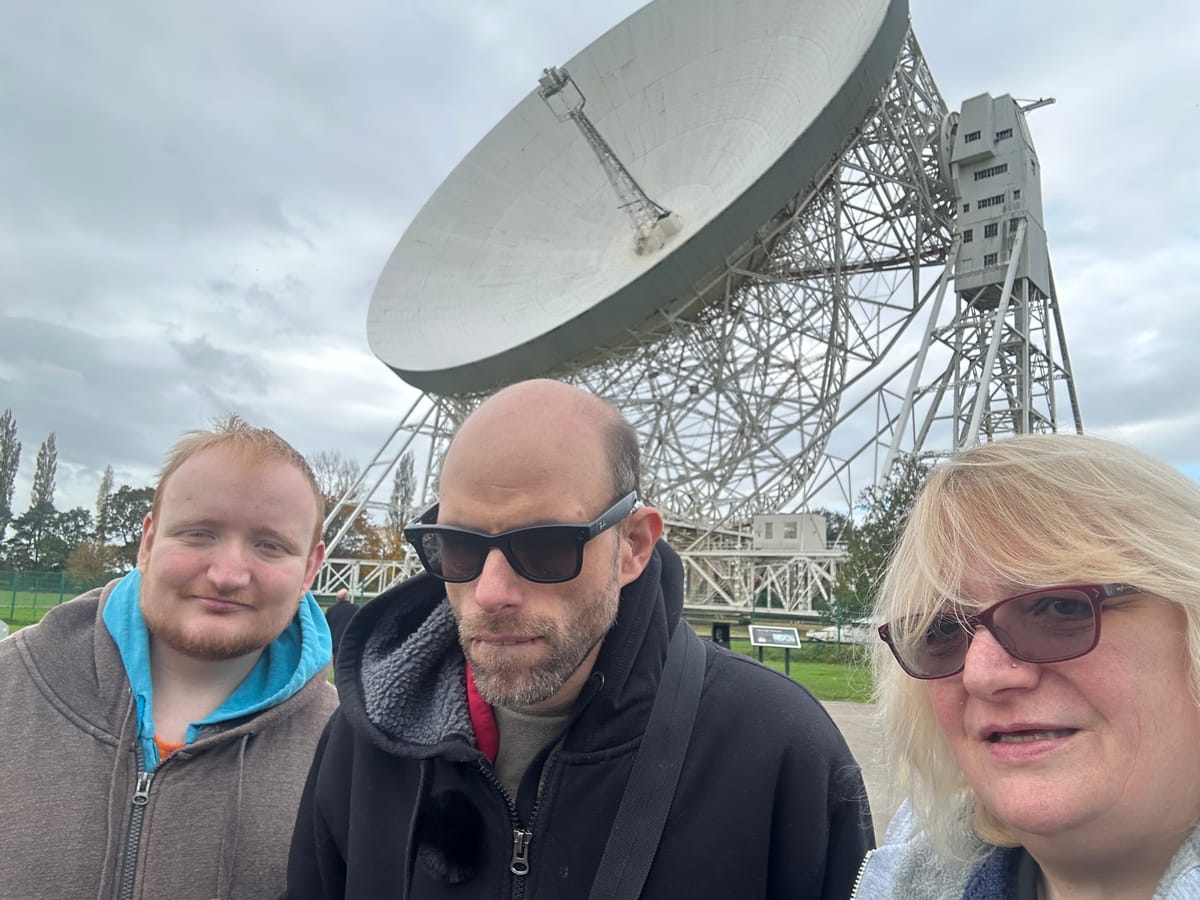
When you think of Jodrell Bank, the first thing that probably comes to mind is the enormous Lovell Telescope. It's certainly an impressive sight, but we wanted to discover what else this famous observatory had to offer.
As a family with different disabilities, we were particularly interested in how accessible the exhibitions would be.
John has been totally blind since birth and has severe hearing loss, while George is autistic and has hypermobile Ehlers-Danlos syndrome (EDS).
Would there be enough for us all to enjoy? And, importantly, would John be able to experience the exhibits himself, or would he need me to describe everything?
We went along to find out.
Prices: Our admission tickets (one adult, one companion, one student, booked on the day rather than online) came to £35.10 in total
Carer ticket: A free companion ticket was provided alongside the adult and student tickets
Parking: Plenty of designated disabled parking spaces
Visual impairment: Much of the First Light Pavilion’s information is on screens and interactive displays that needed describing aloud; a Braille label on a Moon exhibit and a tactile model of the Lovell Telescope were the exceptions John could use independently
Prices and policies as we found them on our visit — always check with the venue before you go.
Arriving at Jodrell Bank – Parking and Tickets
One of the first positives was the parking. There were plenty of designated disabled parking spaces, which made arriving and getting organised much easier.
We hadn't booked our tickets in advance, which turned out to be a slightly more expensive decision. We'd have saved money by buying them online.
Our admission tickets came to £35.10 in total for the three of us.
We received an adult ticket, a free companion ticket and a student ticket for George.
Rather amusingly, the adult ticket was assigned to me, while John was given the companion ticket!
Given that John is totally blind, I suggested that perhaps he could guide me around next time.
With the tickets sorted, it was time to explore.
Exploring the First Light Pavilion
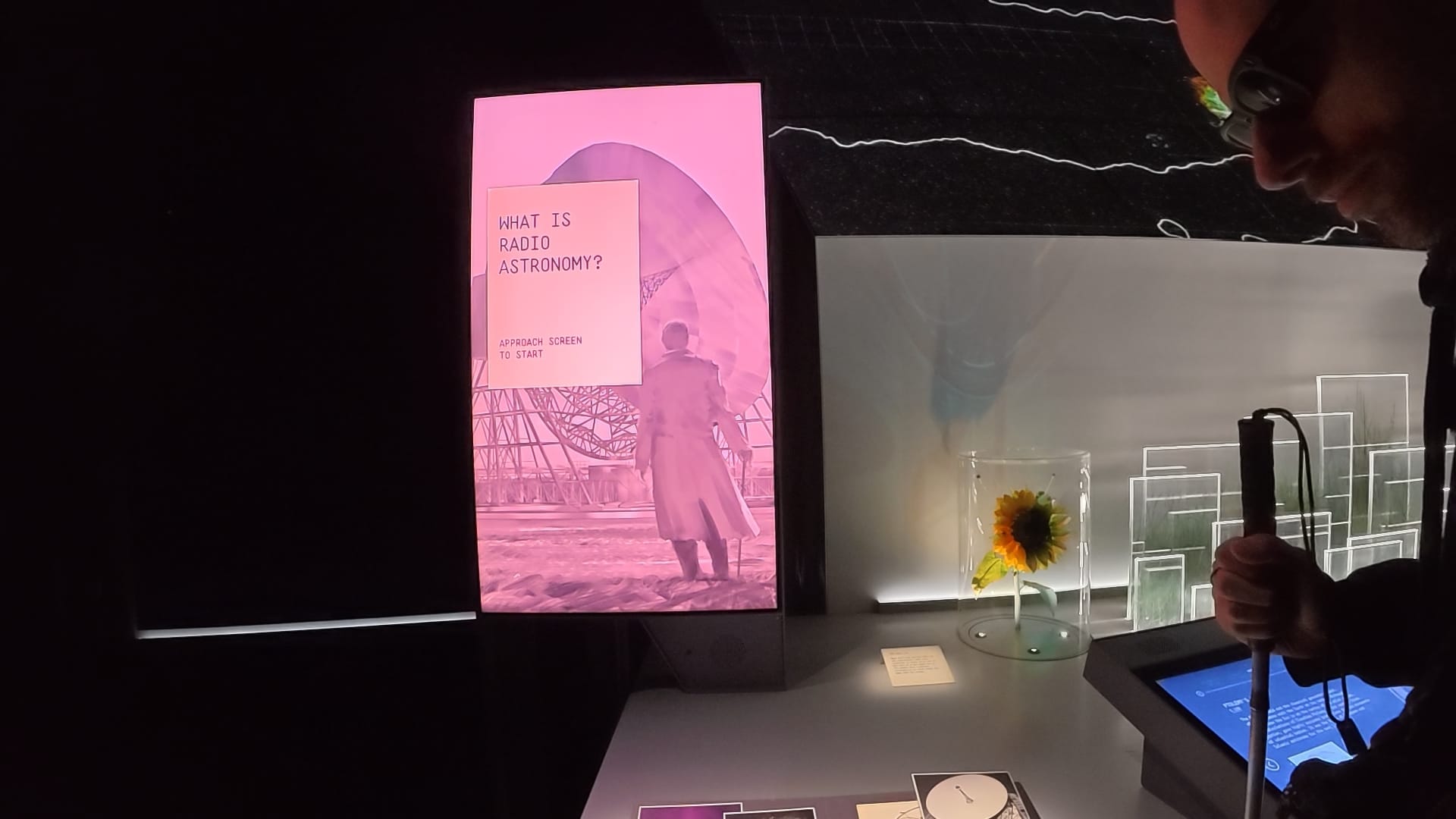
The First Light Pavilion is an impressive building containing an exhibition about the history of Jodrell Bank, radio astronomy and the people behind the discoveries.
There's a great deal of information to explore, including the development of the telescope, the early days of radio astronomy and the science involved.
Unfortunately, we quickly noticed something that would become a recurring issue throughout our visit.
A considerable amount of the information was presented visually, particularly through screens and interactive displays.
For sighted visitors, these can be interesting ways of discovering the history and science. But for John, they presented a problem.
He couldn't see the information on the screens, which meant I needed to read it aloud or explain what was happening.
There were some audio elements, which were useful, but much of the exhibition still required assistance.
This is something we encounter quite frequently. An attraction may have plenty of interactive exhibits, but that doesn't necessarily mean those exhibits are accessible to someone who cannot see.
Dome Shows or Game Shows?
We also had an amusing exchange with a member of staff.
He was explaining where the dome shows took place when John, who hadn't heard him correctly, asked:
"Game shows?"
Both the staff member and I replied:
"DOME shows!"
It's the sort of misunderstanding that can happen when someone has severe hearing loss, and it gave us a little moment of amusement during our visit.
Interactive Exhibits – And Saving 32 Ships!
There were several interactive activities to try, and I couldn't resist having a go at a radar game.
The challenge was to save ships, and somehow I managed to rescue 32 of them!
At that point, with John smiling beside me, I decided it was probably best to quit while I was ahead.
It was a bit of fun and certainly gave us something to talk about.
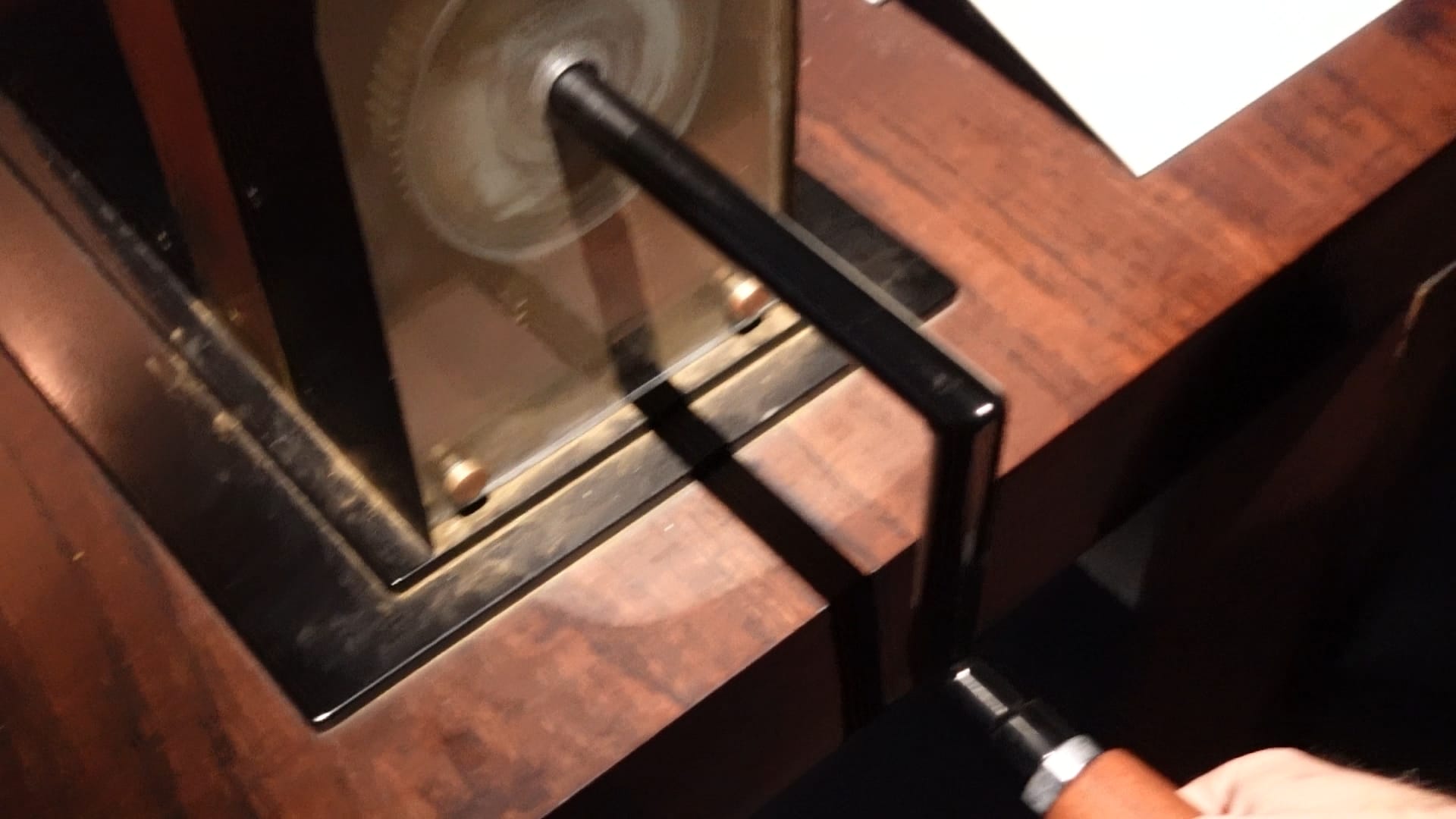
John also tried an interactive exhibit involving a hand crank.
Turning the handle produced a spark display on a screen.
He could turn the handle himself, which was good, but he couldn't see the result. I needed to describe what was appearing on the screen.
It was a useful example of the difference between being able to operate an exhibit and being able to experience the outcome independently.
John could take part physically, but without someone explaining the visual result, he wouldn't know what his actions had produced.
George Finds Something John Can Read!
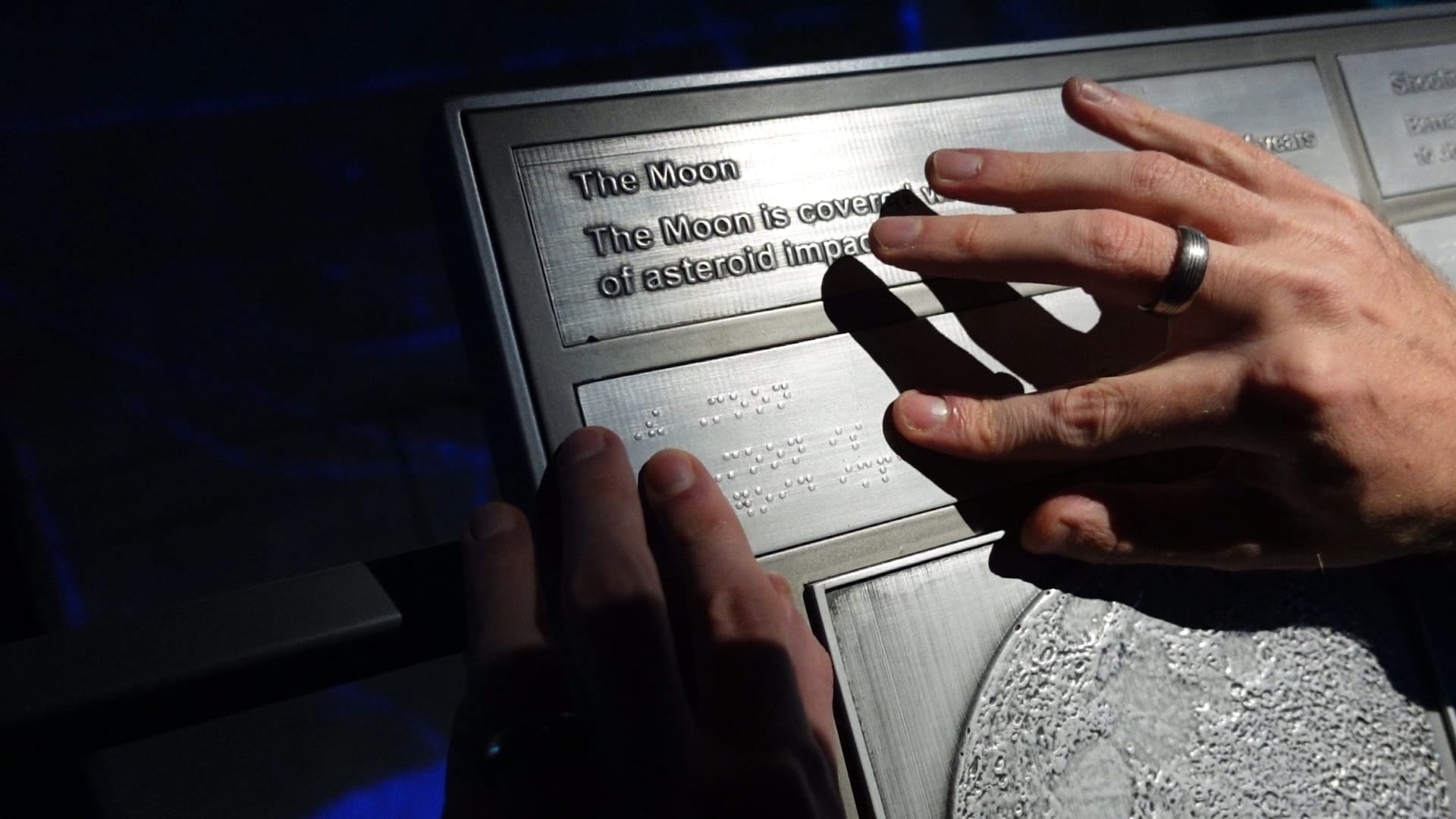
One of the most welcome discoveries came when George spotted some Braille on an exhibit about the Moon.
John was able to feel the label and read it himself.
This was particularly pleasing because we'd encountered so much information that he couldn't access without assistance.
Here was something he could read independently.
Braille might seem like a fairly simple accessibility feature, but it can make an enormous difference to someone who uses it.
It allows them to explore information directly, rather than having to rely on another person to read it.
Unfortunately, we didn't find much Braille during our visit, which made George's discovery all the more noticeable.
The Lovell Telescope – What a Sight!
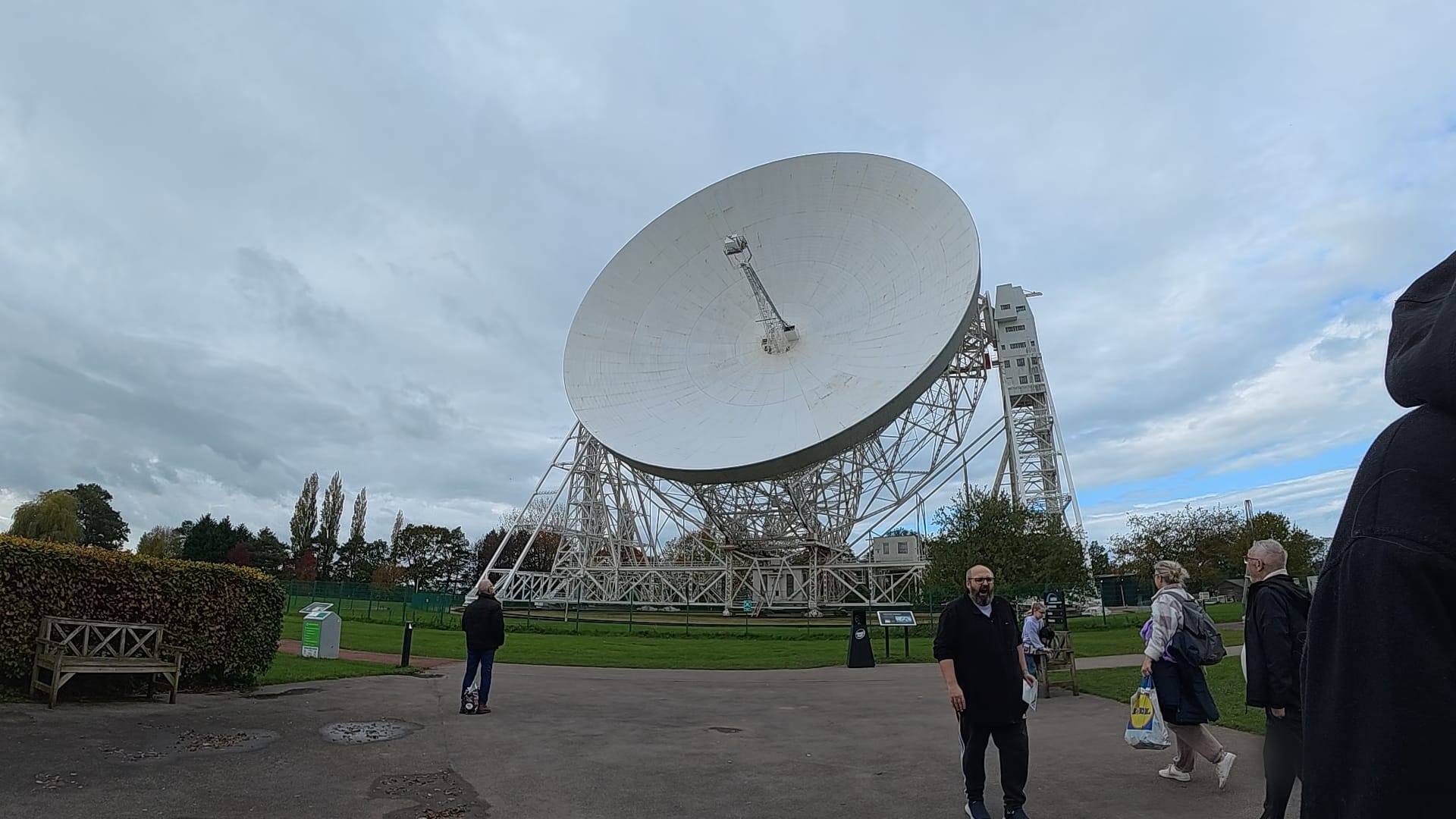
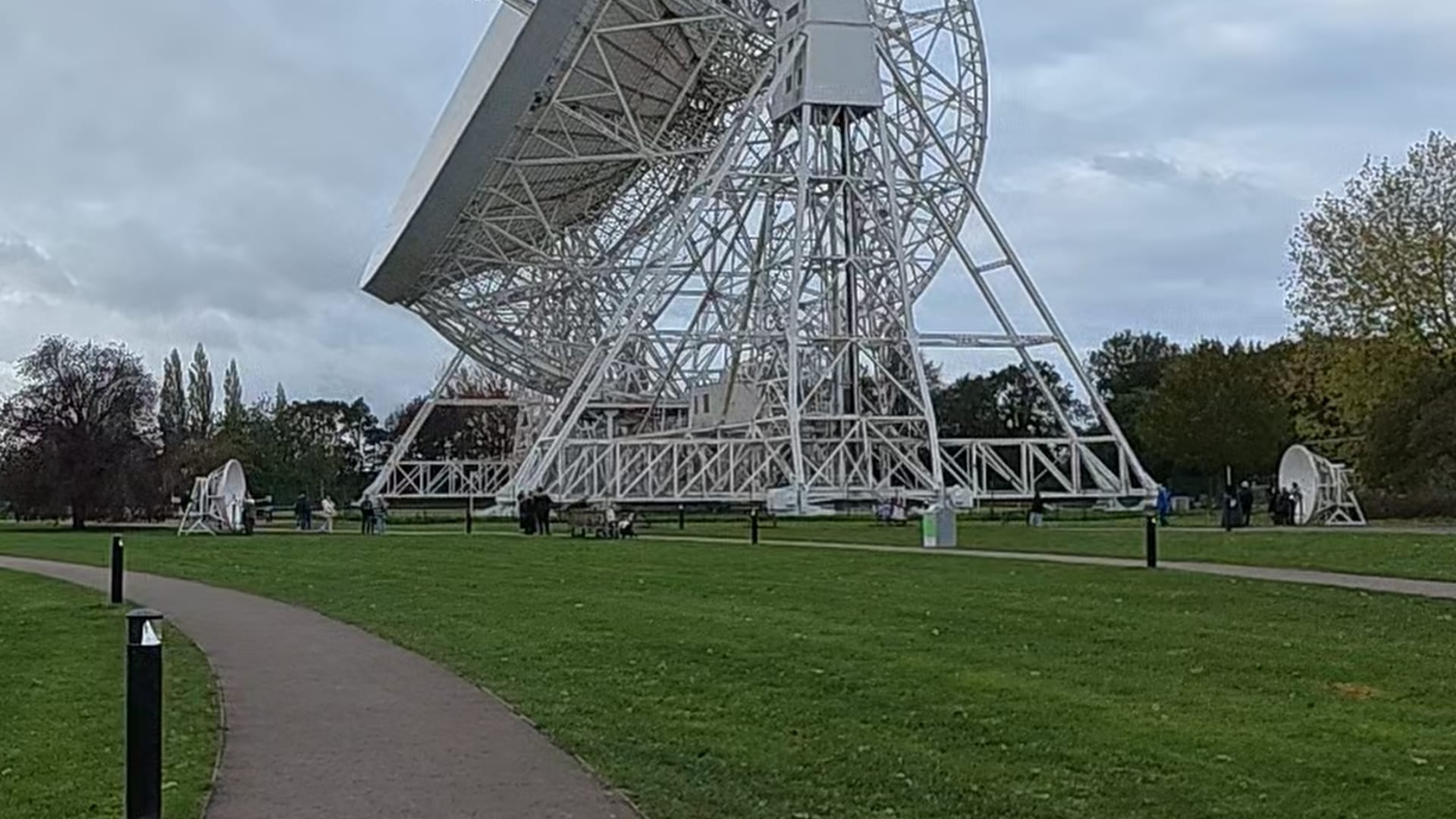
Of course, no visit to Jodrell Bank would be complete without spending some time looking at the enormous Lovell Telescope.
And we were fortunate enough to see it moving!
Watching such a huge structure changing position was fascinating. We could hear the machinery working as the telescope moved.
I described what was happening to John so that he could understand the movement.
It's difficult to appreciate the sheer scale of the telescope until you're standing nearby.
For John, however, there was an obvious question.
How could he understand what such an enormous structure actually looked like?
I could describe the dish, the supporting structure and its movement, but descriptions only go so far.
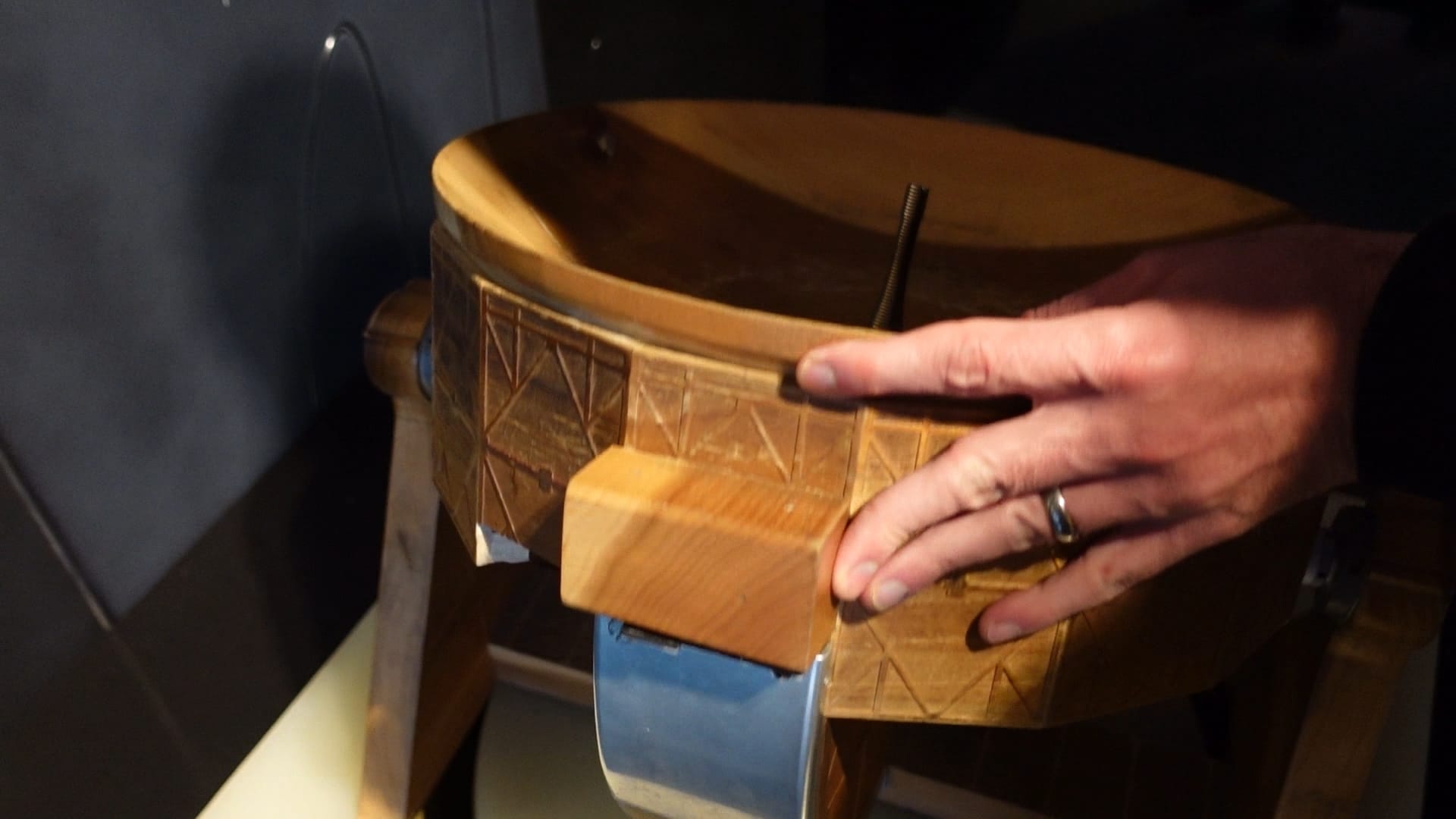
Fortunately, we discovered a tactile model of the telescope.
John was able to explore it with his hands, feeling the shape of the dish and the structure supporting it.
This was one of the most useful accessibility features we encountered.
Rather than relying entirely on my descriptions, he could develop his own understanding of the telescope through touch.
It's a good example of how tactile exhibits can make something visual much more meaningful to a blind visitor.
The Whispering Dishes
Outside, we also came across the whispering dishes.
These are large dishes positioned some distance apart. The idea is that someone speaking quietly into one can be heard by someone standing at the other.
They're a fascinating demonstration of how sound travels.
Seeing them reminded me of a funny incident from a previous visit to Jodrell Bank.
A little girl had shouted:
"HELLO GRANNY!"
Clearly, nobody had explained the whispering part!
I recalled the story with John, who found it very funny.
Sometimes it's these little conversations and unexpected memories that can add to an enjoyable day out.
So, How Accessible Is Jodrell Bank?
This is where we had mixed feelings about our visit.
There were certainly positives.
The disabled parking was plentiful, and there were exhibits that John could interact with.
The Braille label was a welcome discovery, and the tactile model of the Lovell Telescope was particularly useful.
We also enjoyed hearing the telescope moving, and some of the exhibition information was available through audio.
However, a considerable amount of the experience relied on visual information.
There were numerous screens and interactive displays that John couldn't use meaningfully without somebody explaining them.
Even when he could physically operate an exhibit, the result wasn't necessarily accessible to him.
The hand-cranked spark display was a good example of this.
And while the tactile telescope model was excellent, it also demonstrated how much more could be achieved if tactile information were available more widely.
John summed things up towards the end of our visit.
He felt that Jodrell Bank could be an enjoyable place for a blind visitor who had someone with them to read information and describe what was happening.
But visiting independently would be much more difficult.
That's an important distinction.
An attraction can be physically accessible and still leave someone unable to access much of the information without assistance.
For us, accessibility isn't simply about being able to enter a building. It's about being able to participate in the experience.
Our Final Thoughts – Would We Recommend Jodrell Bank?
Overall, we enjoyed our day at Jodrell Bank.
Seeing the Lovell Telescope moving was a real highlight, and there were plenty of interesting things to discover.
We particularly appreciated the tactile model and the Braille information, both of which allowed John to experience something independently.
However, we would love to see more of the exhibits made accessible to blind visitors, rather than relying so heavily on screens and visual information.
Would we recommend visiting?
Yes, especially if you're interested in science, space and the history of radio astronomy.
But for a totally blind visitor, we'd recommend going with someone who can read information and describe the visual exhibits.
It's a fascinating place, but there's definitely room for improvement when it comes to independent accessibility.
Watch Our Jodrell Bank Adventure on YouTube
We've filmed our visit so you can see the moving Lovell Telescope, our experiences with the interactive exhibits, George's Braille discovery and John's exploration of the tactile model.
You'll also hear John's own thoughts about how accessible he found the attraction.
Planning your own day out? See our full UK carer ticket and disabled admission directory — carer policies, disabled parking and access notes for every place we have reviewed.