Shugborough Estate – A Huge National Trust Day Out in Staffordshire
It had been around 40 years since I last visited Shugborough Estate. My rather vague memory of that visit involves a teddy bears' picnic, and I certainly don't remember appreciating just how enormous the place was. I do now!

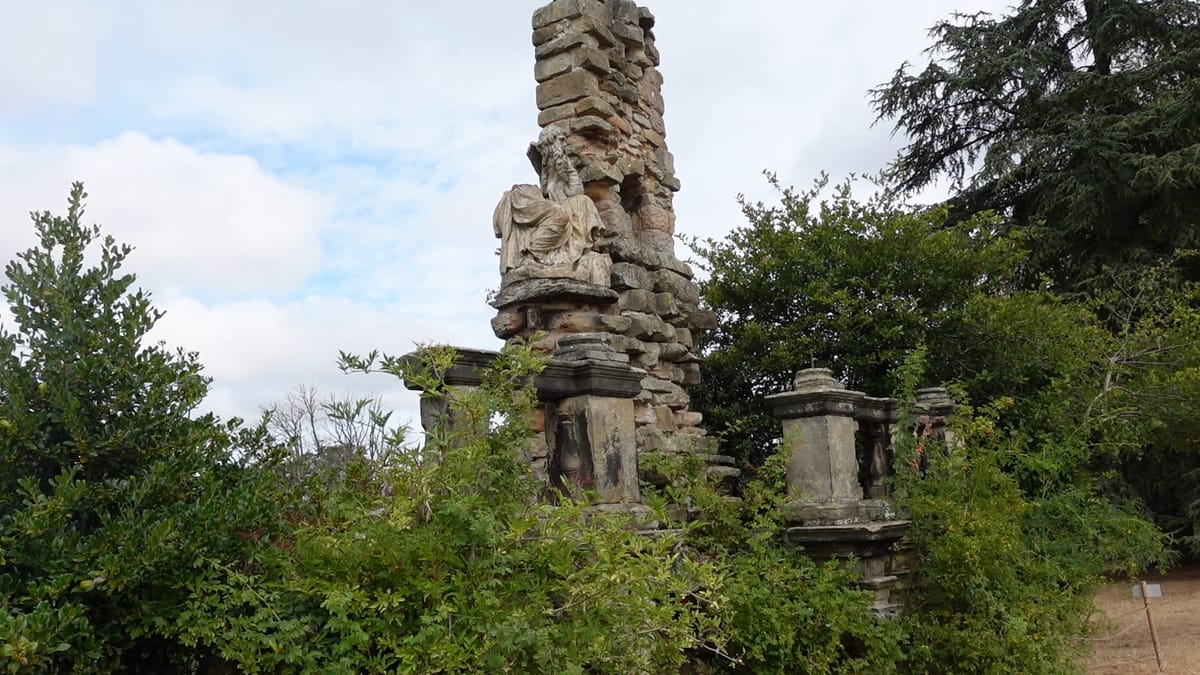
It had been around 40 years since I last visited Shugborough Estate. My rather vague memory of that visit involves a teddy bears' picnic, and I certainly don't remember appreciating just how enormous the place was.
I do now!
Shugborough is a huge National Trust estate near Stafford, with parkland, gardens, historic buildings, the Mansion, servants' quarters and plenty more to explore. We discovered very quickly that this isn't somewhere you're going to see everything in a couple of hours.
Despite doing what felt like a shedload of walking, we barely scratched the surface.
Prices: Whole Property (House, park and gardens) — Adult £18, Child (5–17) £9, under 5s free, family tickets £27–£45. Park and Gardens only — Adult £12, Child £6, family tickets £18–£30. Standard prices without Gift Aid.
Carer ticket: Carers are admitted free.
Parking: Plenty of disabled parking on our visit.
Toilets: Accessible toilets at several points, including Park Farm, the Plant Centre and Midden Yard, plus a Changing Places facility (National Trust's listing).
Mobility: It's a huge estate — the Mansion is about 1km from Visitor Reception. A shuttle runs between the car park/Visitor Reception and the Mansion only; other areas still mean walking. National Trust also lists wheelchairs to borrow and pre-bookable mobility scooters/Trampers, which we didn't use ourselves.
Sensory: The Zen Den offers a space to step away and self-regulate.
Prices and policies as we found them on our visit — always check with the venue before you go.
Parking and arriving at Shugborough
We drove to Shugborough and found plenty of disabled parking available when we visited.
After parking, we headed towards Visitor Reception and then into the estate. There's a large map showing the different areas and, fortunately, there are signposts around the estate to point you in the right direction.
One of the first things you need to appreciate is the sheer size of Shugborough.
The Mansion is around 1km from Visitor Reception, and that's before you've explored anything else.
If walking longer distances is difficult, don't underestimate it, like we did.
Make use of the shuttle.
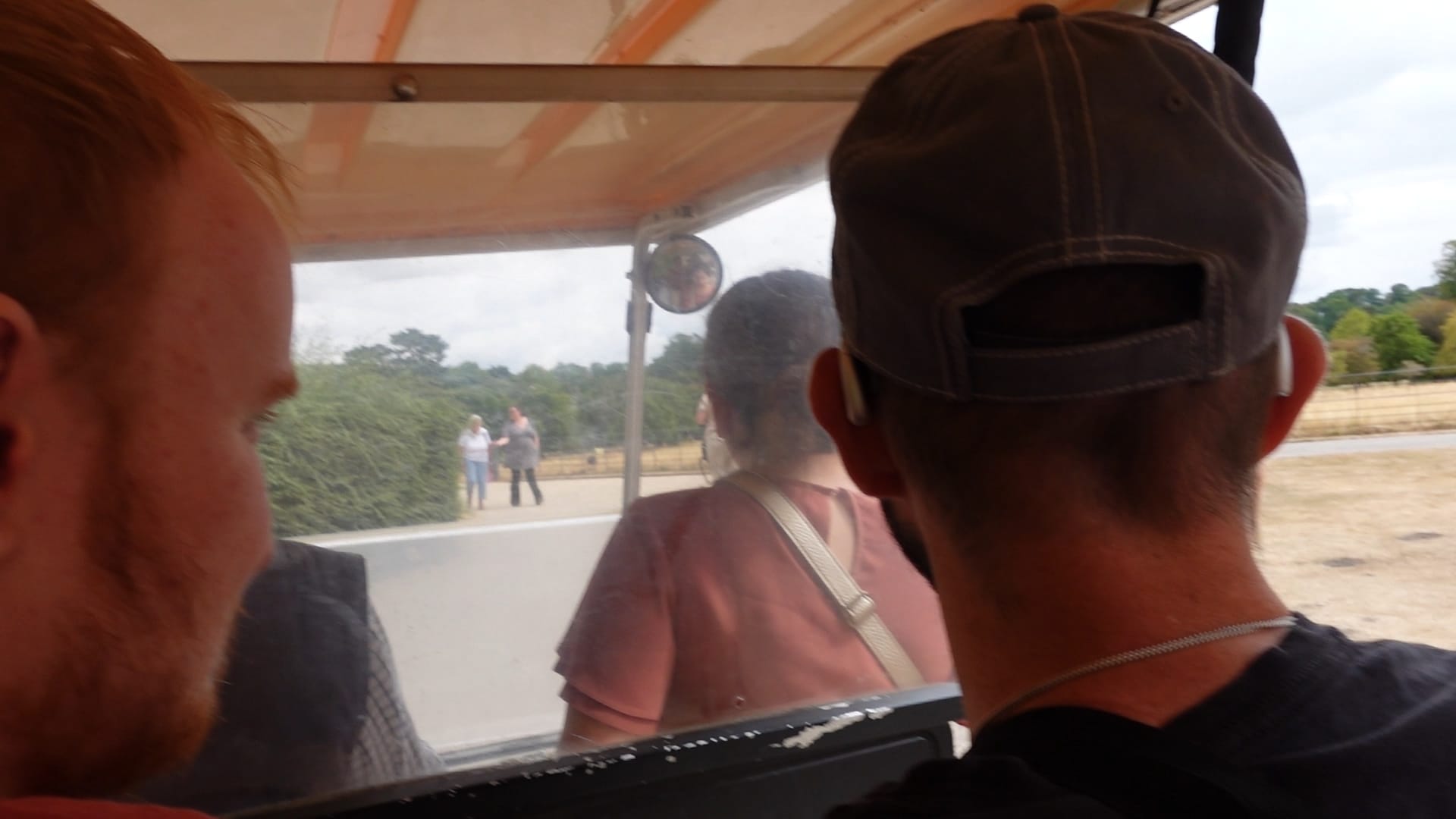
There's a shuttle service between the car park/Visitor Reception and the Mansion. We walked out towards the Mansion but, after everything else we'd done, we got the shuttle back.
One important thing to know is that the shuttle only runs between the car park and the Mansion. If you want to see some of the other things Shugborough has to offer, you're still going to have to do some walking.
If mobility, fatigue or stamina is an issue for anyone in your party, I'd decide what you most want to see before setting off rather than trying to cover the entire estate.
How much does Shugborough cost?
We have National Trust membership, so admission was included in our membership and we showed our membership cards when we arrived.
If you're not a National Trust member, Shugborough has two main admission options.
At the time of writing, the standard prices advertised without Gift Aid are:
Whole Property
- Adult: £18
- Child aged 5–17: £9
- Under 5s: free
- Family – 2 adults and up to 3 children: £45
- Family – 1 adult and children: £27
Park and Gardens
- Adult: £12
- Child aged 5–17: £6
- Under 5s: free
- Family – 2 adults and up to 3 children: £30
- Family – 1 adult and children: £18
Carers are admitted free.
The Whole Property ticket includes the House, while the cheaper ticket is for the park and gardens.
Prices can change, so check the National Trust website before travelling.
Information correct at the time of our visit in August 2026.
Park Farm
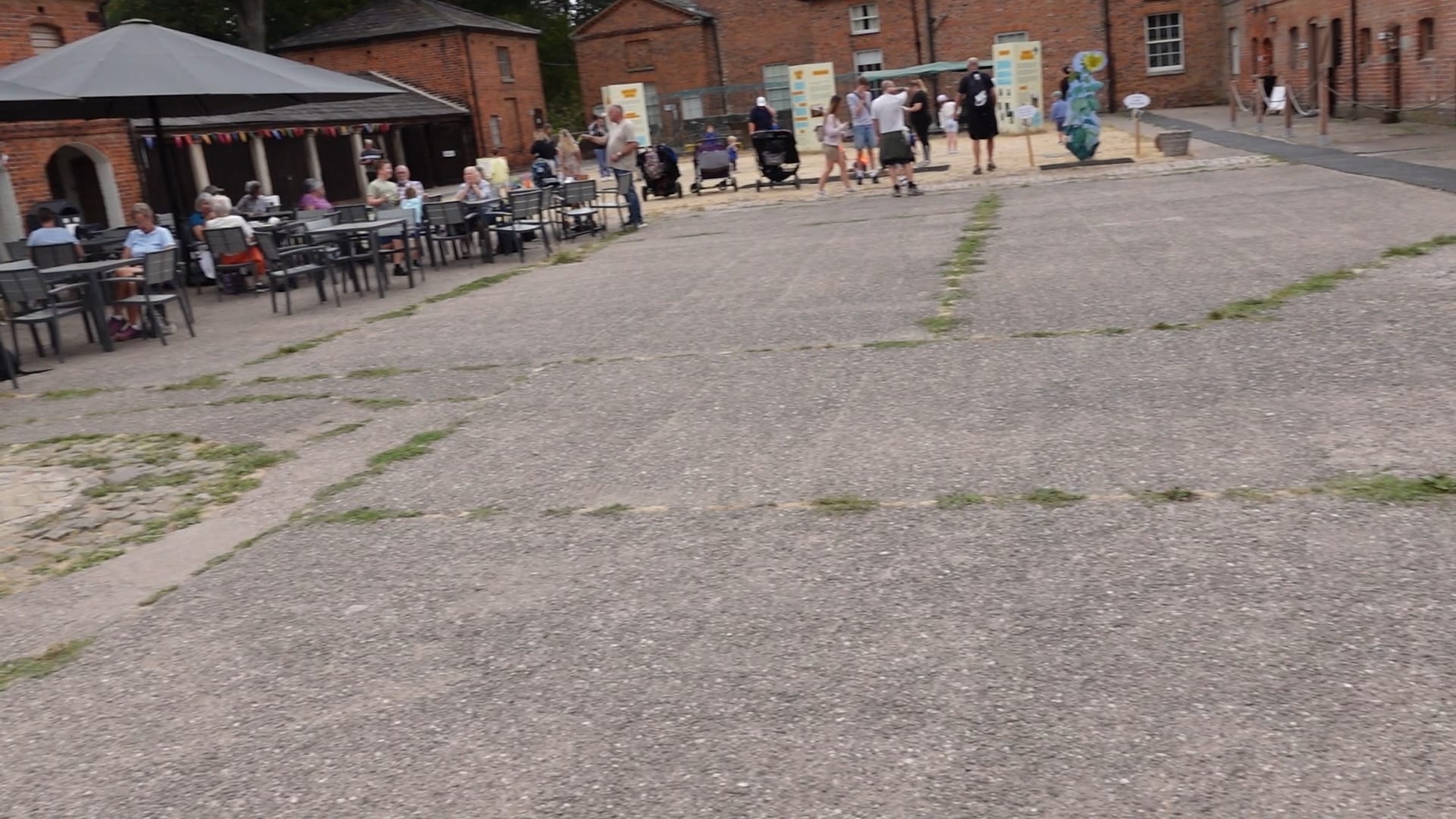
One of the first areas we came to was Park Farm.
The red-brick farm buildings surround the old yard where animals would once have been kept, and there is also a café here.
It gives you an early indication of just how much there is spread around the Shugborough Estate – this isn't simply a stately home with a garden attached.
Dogs are allowed in much of the outdoor estate, although there are restrictions inside buildings.
Fortunately, there are signposts!
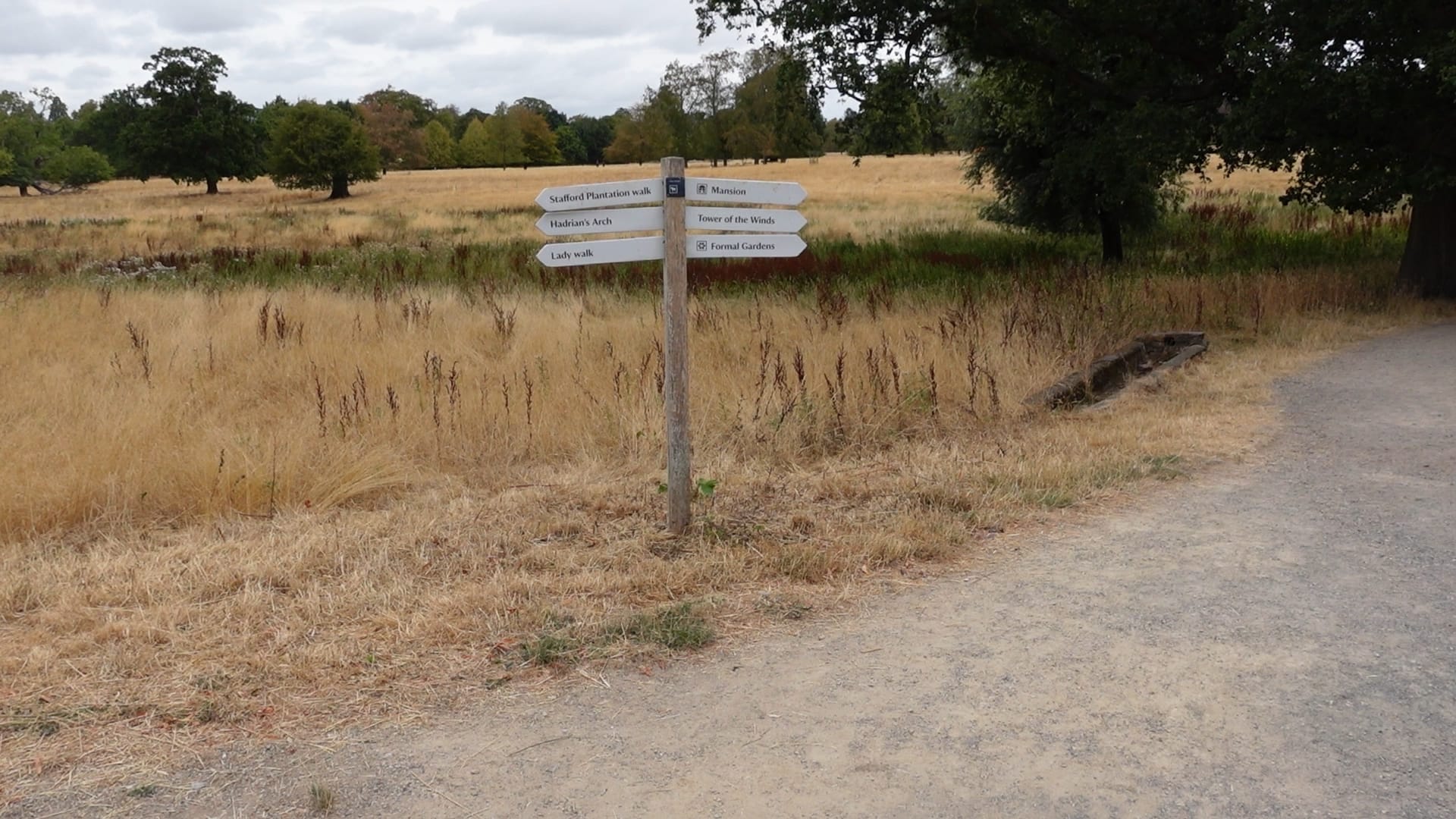
From Park Farm we followed the signs towards the Mansion, Tower of the Winds and Formal Gardens.
There are various walks and other areas signposted in the opposite direction too, including Stafford Plantation Walk and Hadrian's Arch.
We didn't get anywhere near seeing all of them.
This is definitely somewhere where I'd recommend looking at the map when you arrive and deciding what matters most to you.
The Tower of the Winds
One of the first historic buildings we reached was the Tower of the Winds.
It was built in 1765 and later became a working and ornamental dairy during the 19th century. It originally stood on an island in the middle of a lake and was reached by two ornamental bridges.
Only the ground floor was open during our visit, but we were able to go inside and see the interior and its stained-glass windows.
We also discovered a previously undocumented architectural feature.
George.
Apparently George isn't actually a feature of the Tower of the Winds, despite the enormous grin suggesting otherwise.

The long walk towards the Mansion
Leaving the Tower of the Winds, we continued towards the Mansion.
And continued.
And continued.
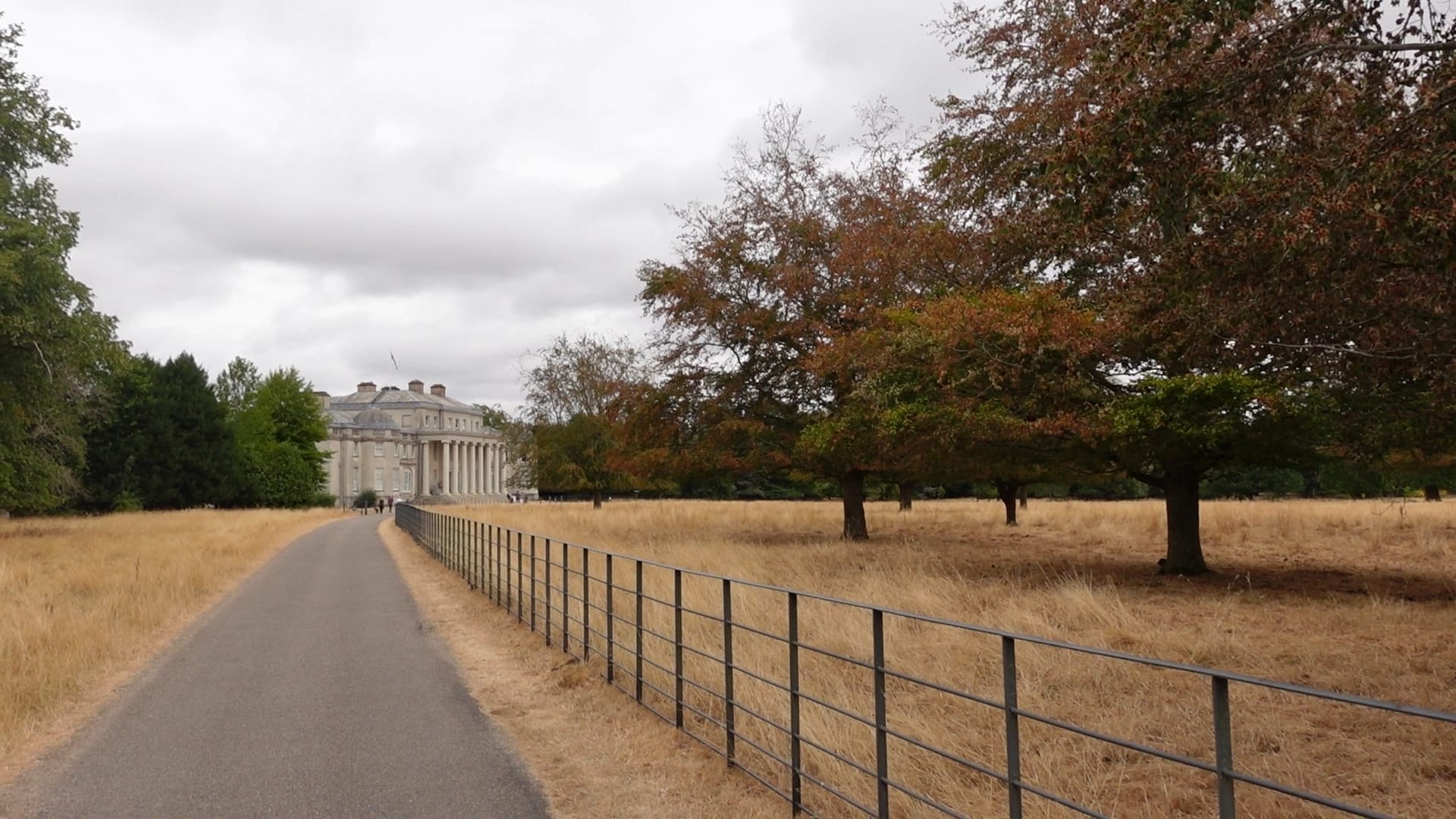
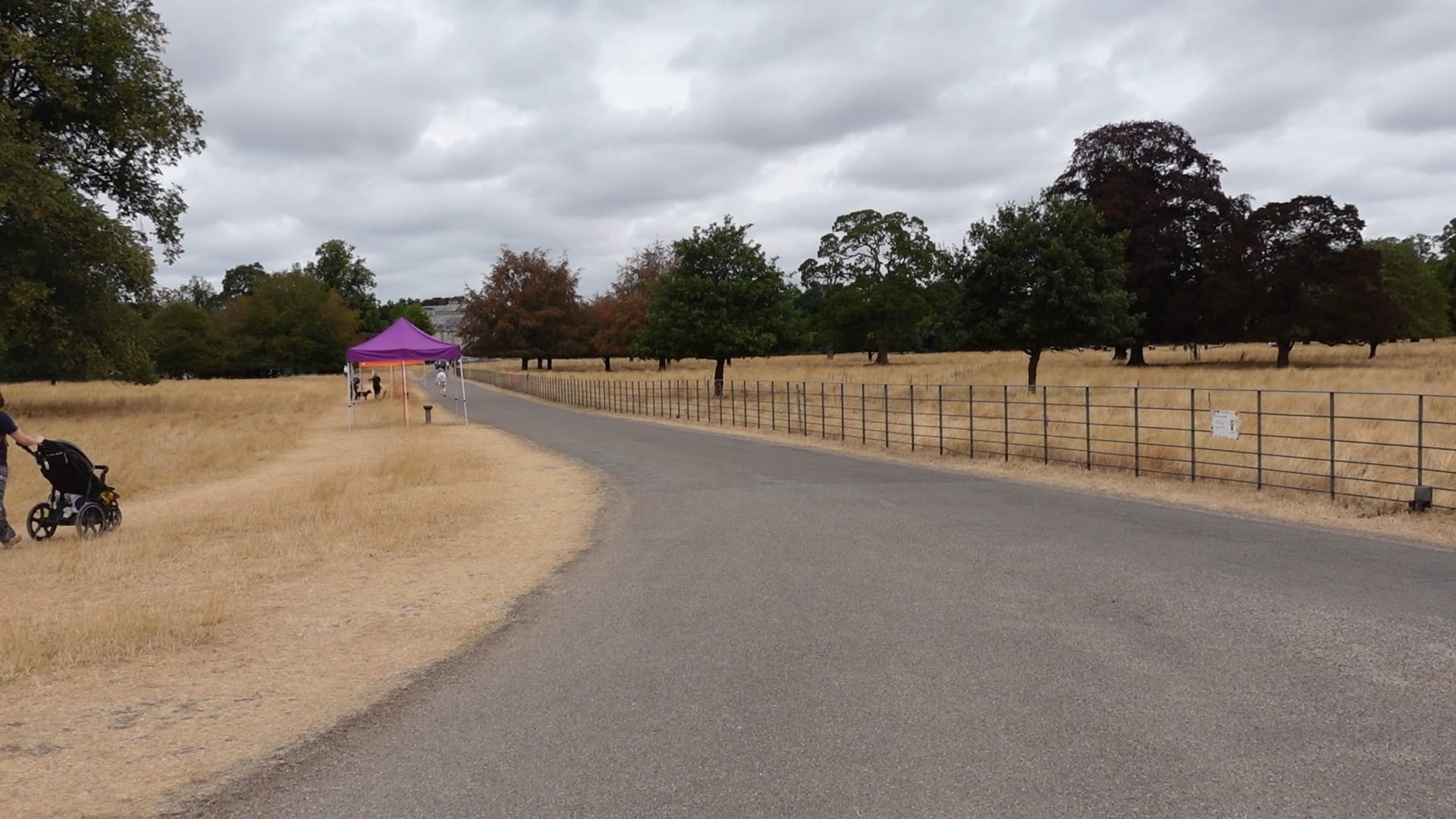
Eventually we got our first view of it in the distance.
If you're able to walk reasonable distances, it's a pleasant walk through the estate. But if walking is difficult, the distance needs to be taken seriously.
The National Trust states that the Mansion is approximately 1km from Visitor Reception.
And remember, reaching the Mansion doesn't mean you've finished walking. You still have everything you want to explore when you get there – and potentially all the other areas of the estate as well.
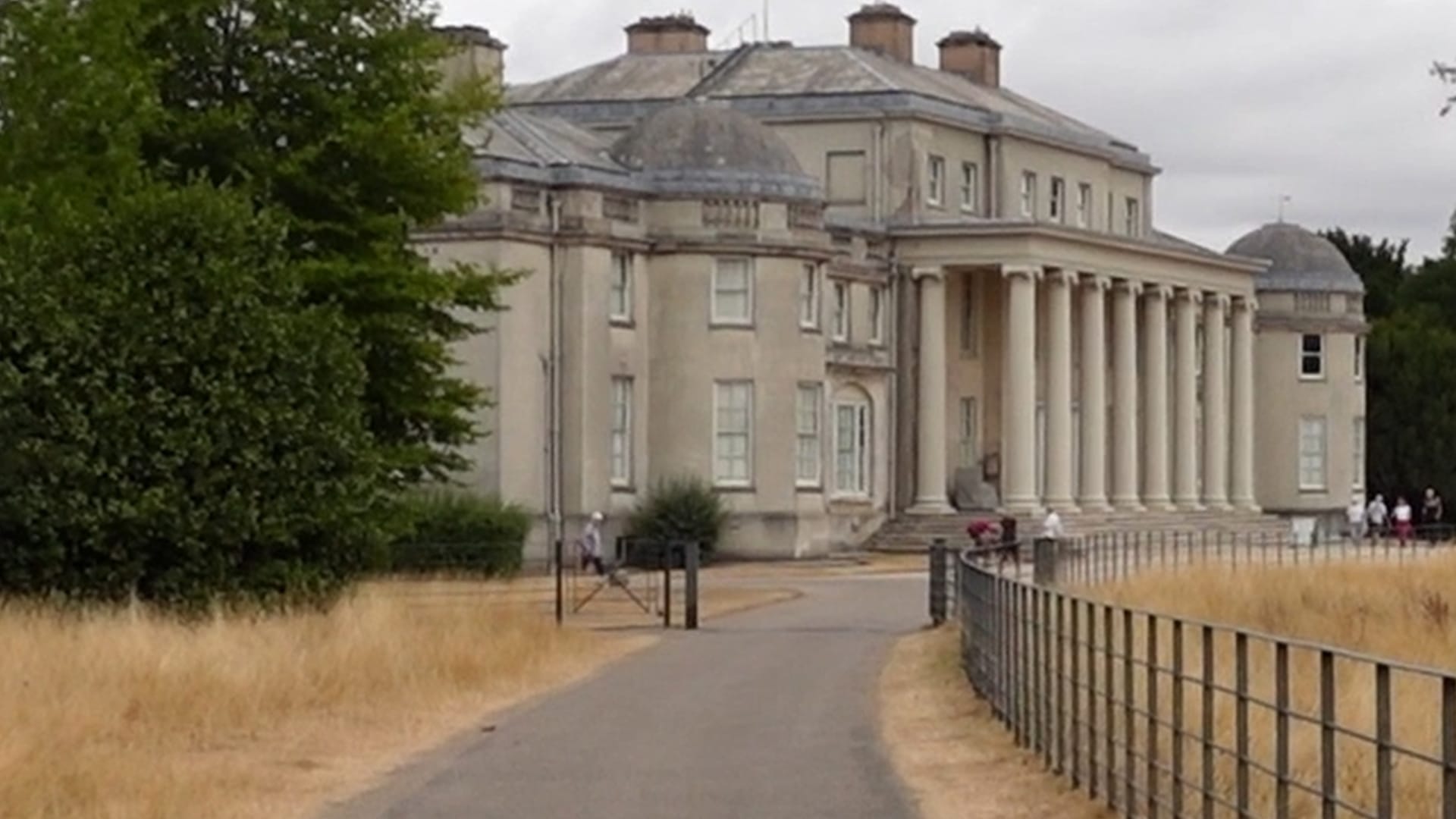
Shugborough Mansion – one for another visit
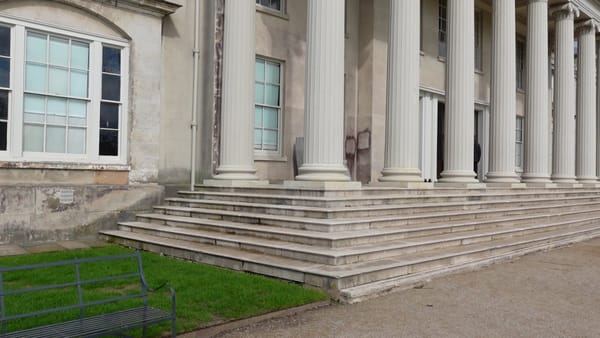
Eventually we reached Shugborough Mansion.
The house is closely associated with photographer Patrick Lichfield, the 5th Earl of Lichfield. He lived in private apartments at Shugborough and became a successful professional photographer, photographing many famous people during his career.
The Lichfield Apartments were one of the things we were particularly interested in seeing.
Unfortunately, they were closed on the day we visited.
The rest of the Mansion was open, but we decided not to go inside. There was already far more to see at Shugborough than we could possibly fit into one visit, so we'll save the Mansion for another day when hopefully the Lichfield Apartments will be open too.
The House and Lichfield Apartments don't necessarily have the same opening arrangements, so if seeing Patrick Lichfield's apartments is particularly important to you, check the opening information before travelling.
We were asked for our National Trust membership cards again at the Mansion. As members we didn't have anything extra to pay.
A National Trust deckchair – possibly from 1765
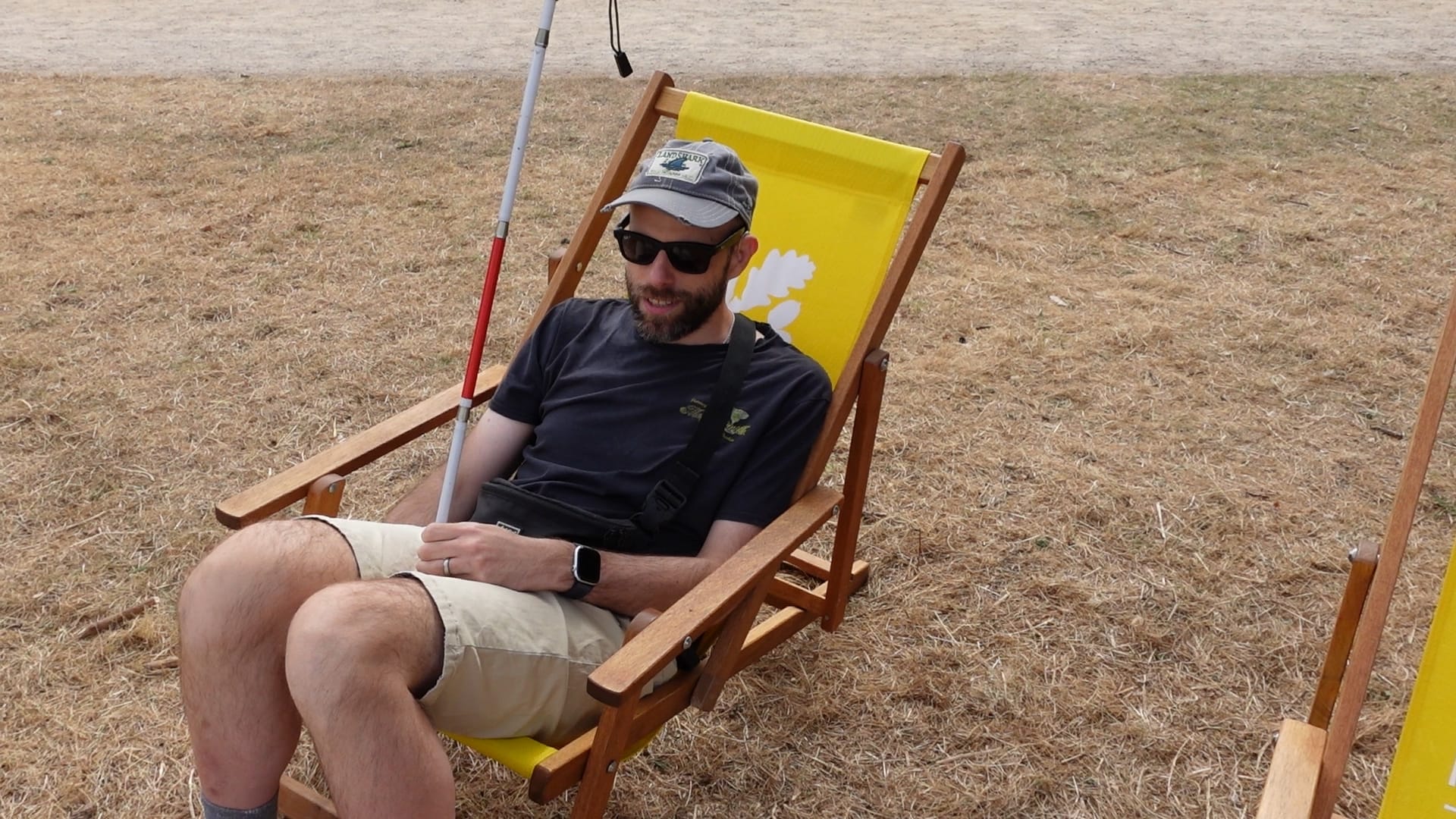
After all that walking, John found somewhere comfortable to sit.
A bright yellow National Trust deckchair.
I pointed out that the deckchairs clearly weren't from the 1700s.
John might be, but the chairs weren't.
John wasn't convinced. Apparently they could simply be really, really, really, really well put together.
Even the words "National Trust" printed on the chair didn't seem to destroy his theory.
Margaritaville vibes, apparently.
The Formal Gardens
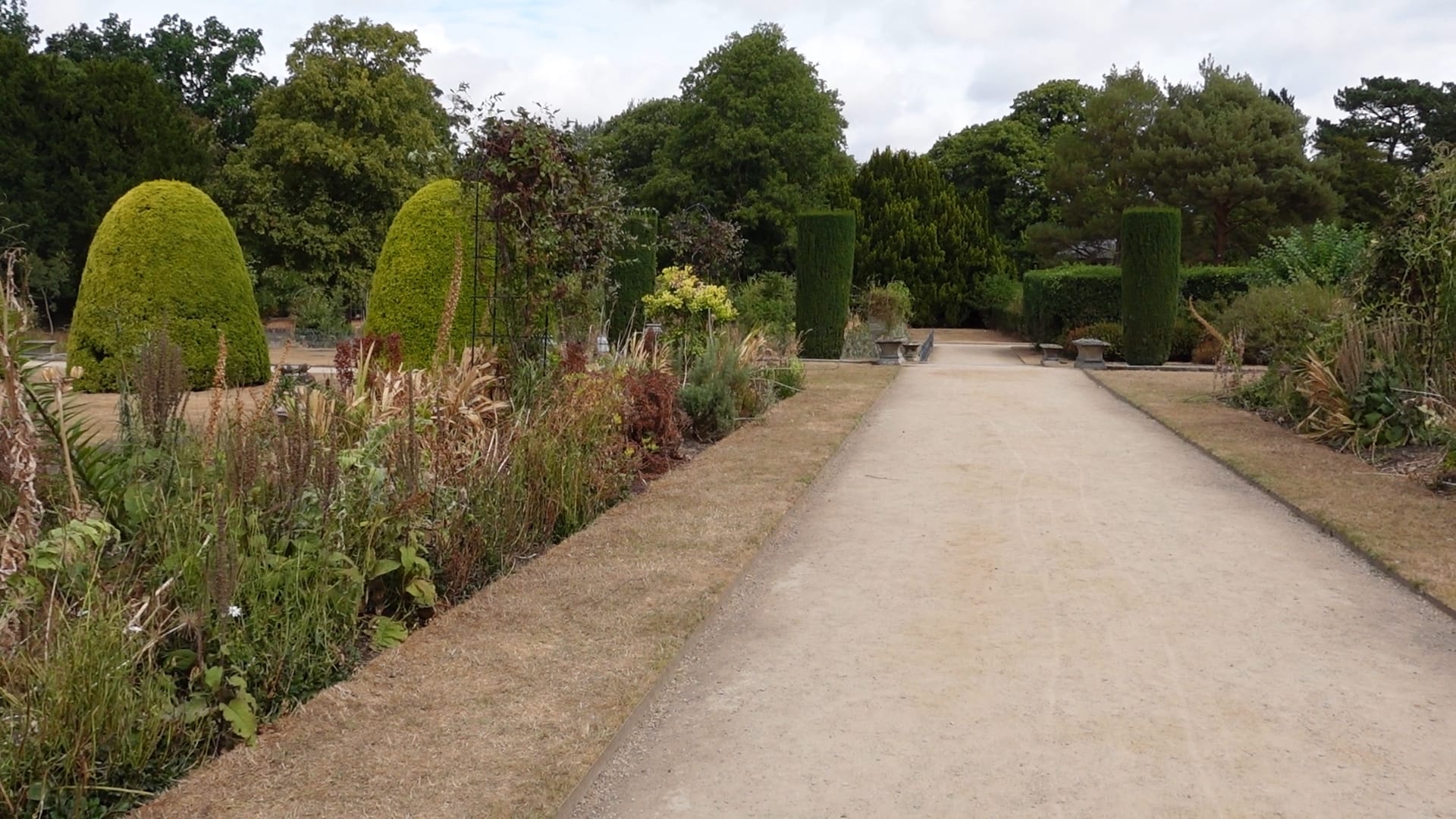
We had a wander through some of the gardens around the Mansion.
We visited during an exceptionally dry spell, so much of the grass across the estate was scorched, but the formal gardens around the Mansion were a little bit greener.
There's far more garden at Shugborough than we explored on this visit, including the Walled Garden and Arboretum, so that's another reason for us to come back.
Exploring the servants' quarters
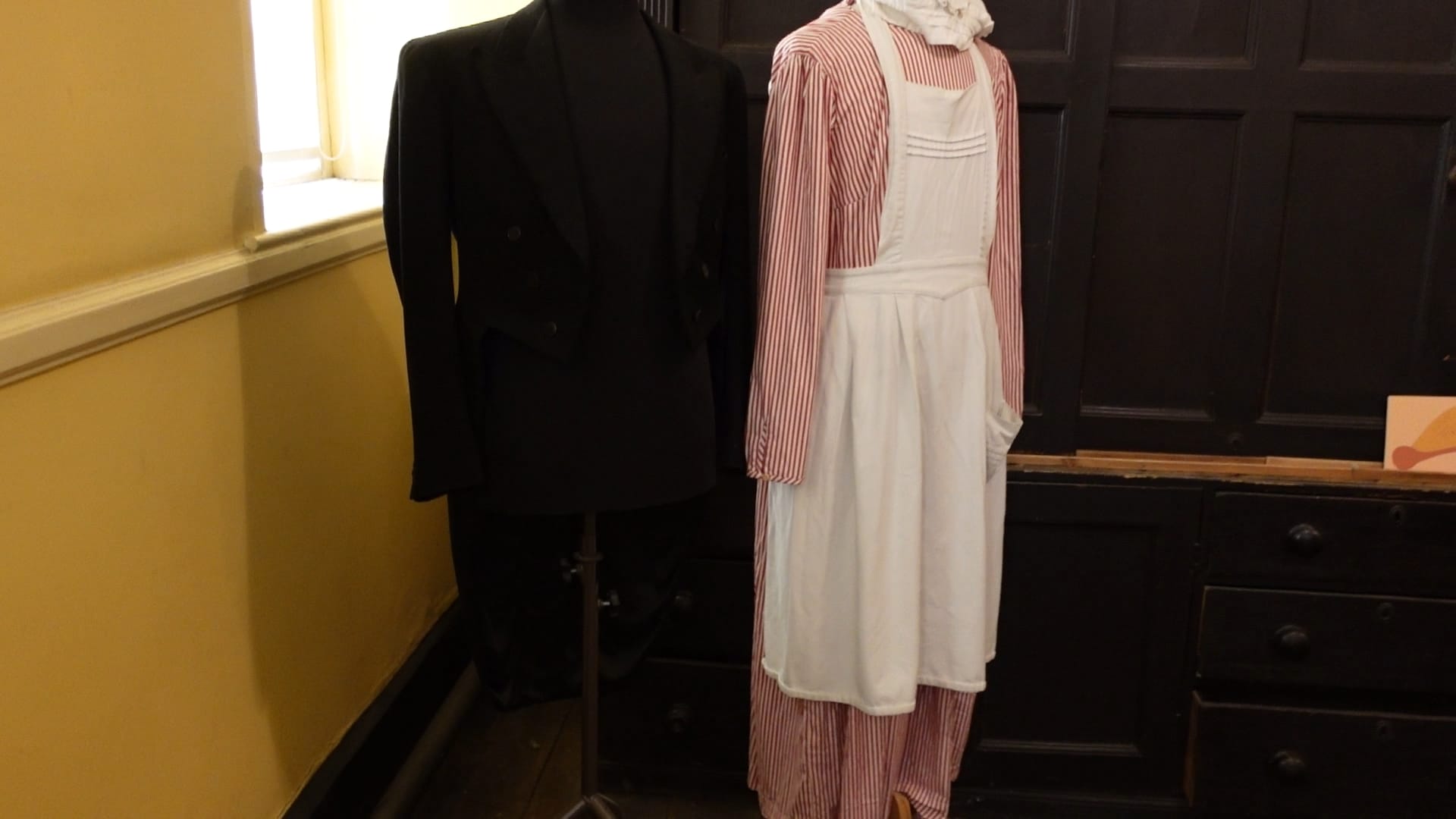
Although we didn't go inside the Mansion itself, we did explore the servants' quarters.
This turned out to be one of the most interesting parts of the day.
There are displays showing what life was like for the people who worked behind the scenes at Shugborough, including some rather strict rules governing how servants were expected to behave.
Among other things, they were expected to keep their hands quiet when spoken to and not allow their voices to be heard by the ladies and gentlemen of the household unless they'd first been spoken to.
There are also examples of the uniforms servants would have worn.
The Servants' Hall – who sat where?
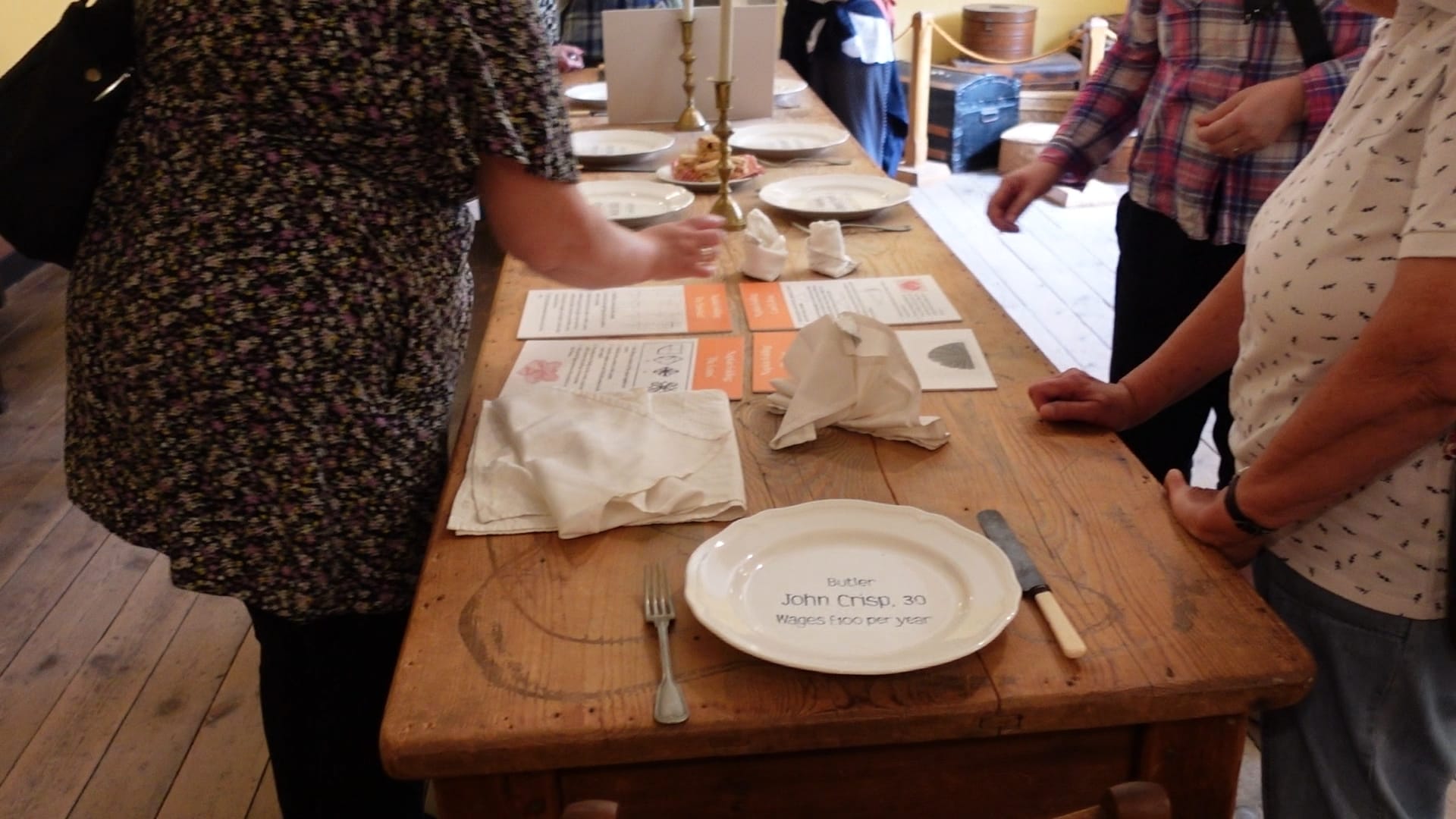
The Servants' Hall contains a long dining table with plates showing where individual members of staff would have sat.
The displays also give you names, jobs, ages and wages, which makes the people who worked there feel rather more real than simply reading a list of historic job titles.
At one end sat the butler, John Crisp, who was 30 and earned £100 a year.
Later we'd discover that somebody else in the household was earning even more.
Laundry – and the famous box mangle
Next came the laundry.
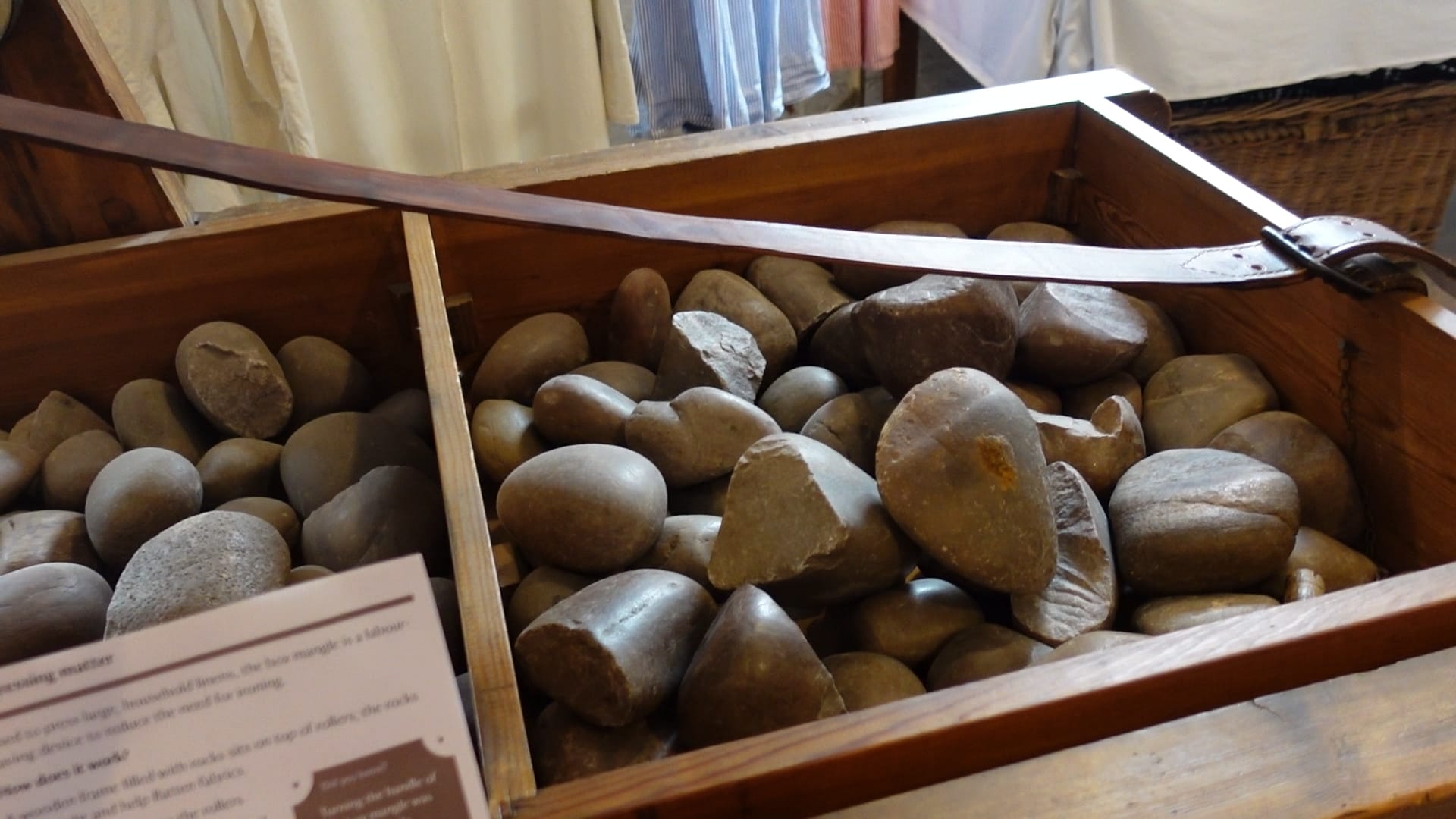
There was an old sewing machine, historic irons and various pieces of laundry equipment, including a large wooden box mangle used for pressing household linens.
And this particular box mangle has achieved unexpected fame.
When I uploaded our Shugborough video to YouTube, out of an entire estate containing a Georgian mansion, historic buildings, gardens and actual human beings, YouTube initially decided that the box mangle was the perfect thumbnail.
It wasn't.
But I feel that after such an enthusiastic endorsement from YouTube, it deserves its photograph in the blog.
Down in the kitchen
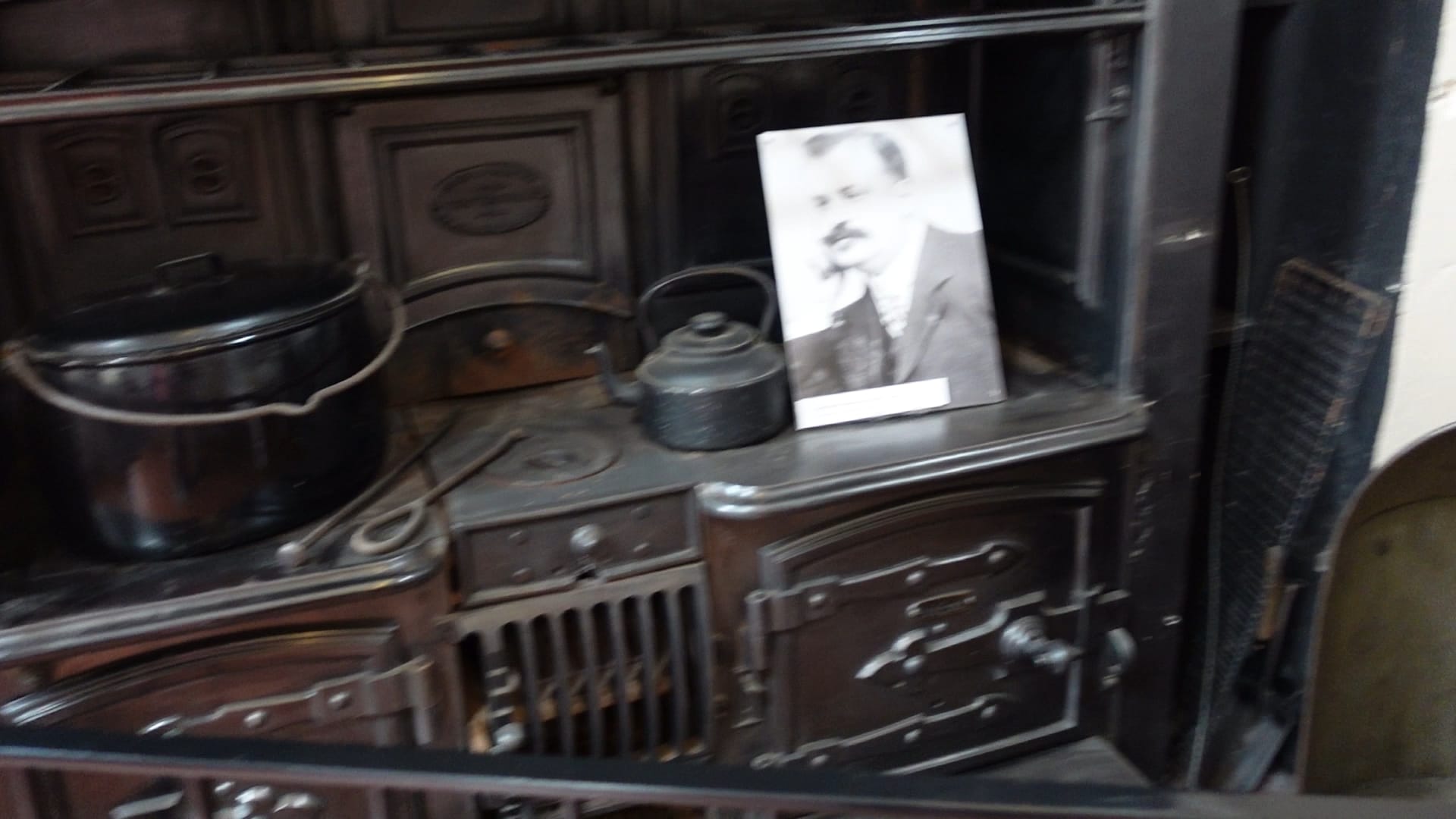
The historic kitchen was another fascinating area.
There are huge cooking ranges and displays explaining how the kitchen worked and who worked there.
The chef was Leon Paul. He was 35 and earned £120 a year – £20 more than the butler.
Apparently the kitchen maids lined up to greet him each morning with "Good morning, Monsieur", while his chopping board, knives and other utensils were laid out ready for him.
He produced meals for the family and their guests in the Mansion, while other kitchen staff prepared food for the household servants.
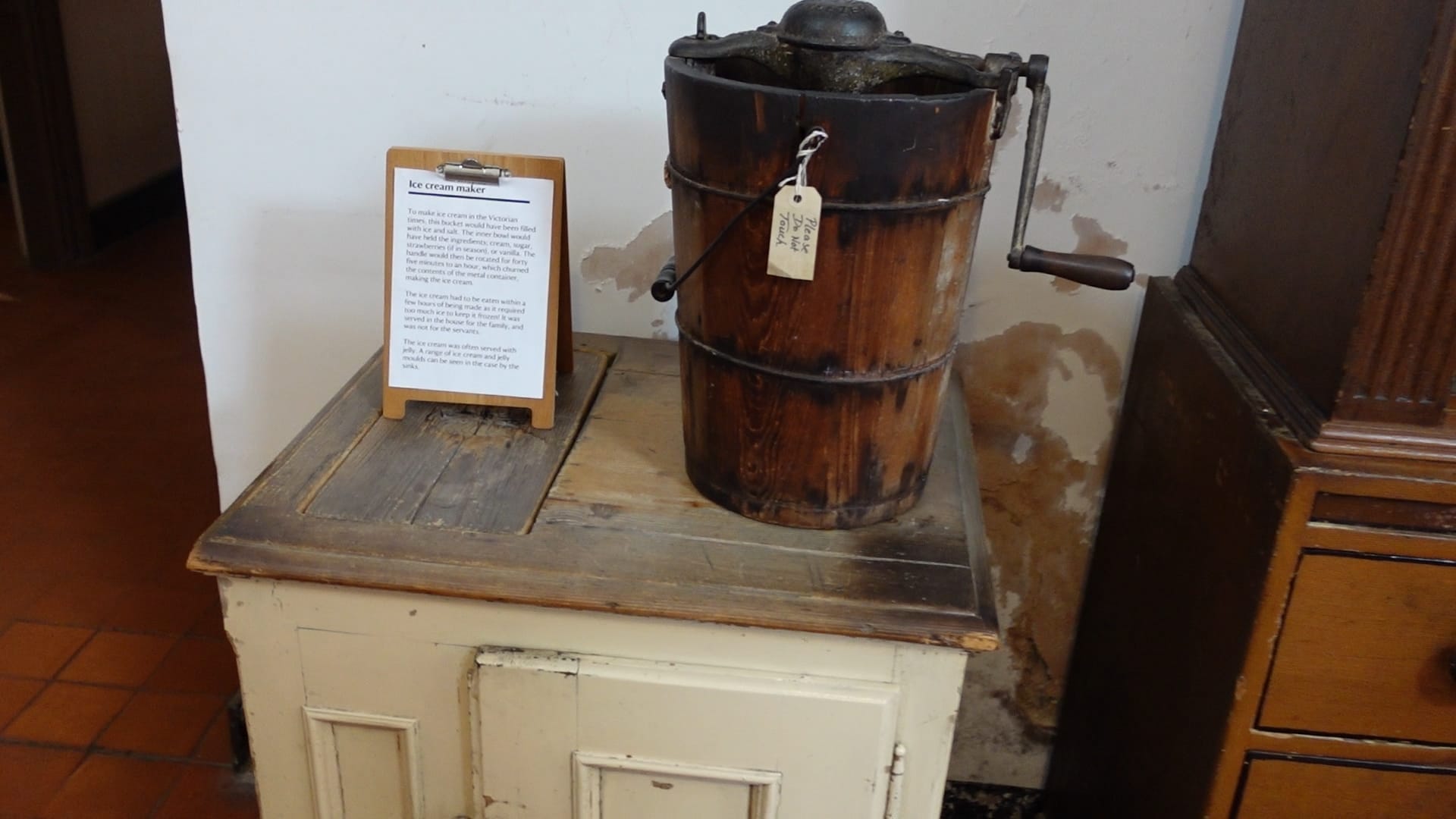
Victorian ice cream – hope you've got a strong arm!
One object in the kitchen particularly caught my attention.
An old ice cream maker.
Making ice cream in Victorian times involved putting ice and salt into the outer bucket, while the ingredients went into an inner container.
Cream, sugar and flavourings such as strawberries when they were in season or vanilla could be used.
Then somebody had to turn the handle.
For 45 minutes to an hour.
Your right arm must either have been incredibly strong by the time the ice cream was ready or ready to drop off completely.
There was no freezer to store the finished ice cream, either, so it had to be eaten within a few hours.
Suddenly buying a choc ice seems much easier.
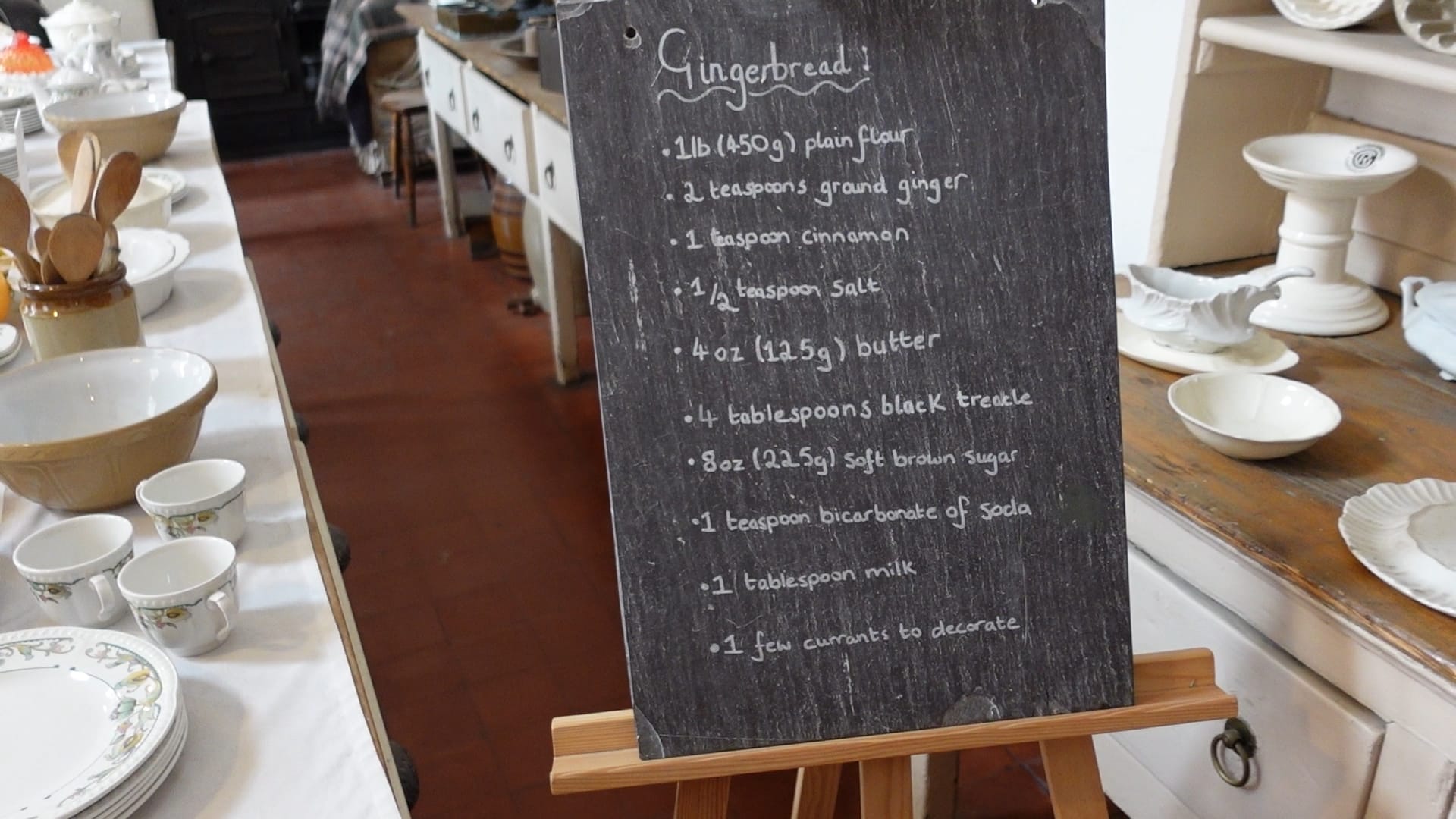
Anyone fancy making gingerbread?
There was also a traditional gingerbread recipe displayed in the kitchen.
I said on camera that I might try making it.
Fortunately – or possibly unfortunately – I've got a perfectly clear picture of the recipe, so I can't even claim I've forgotten what was in it.
Watch this space.
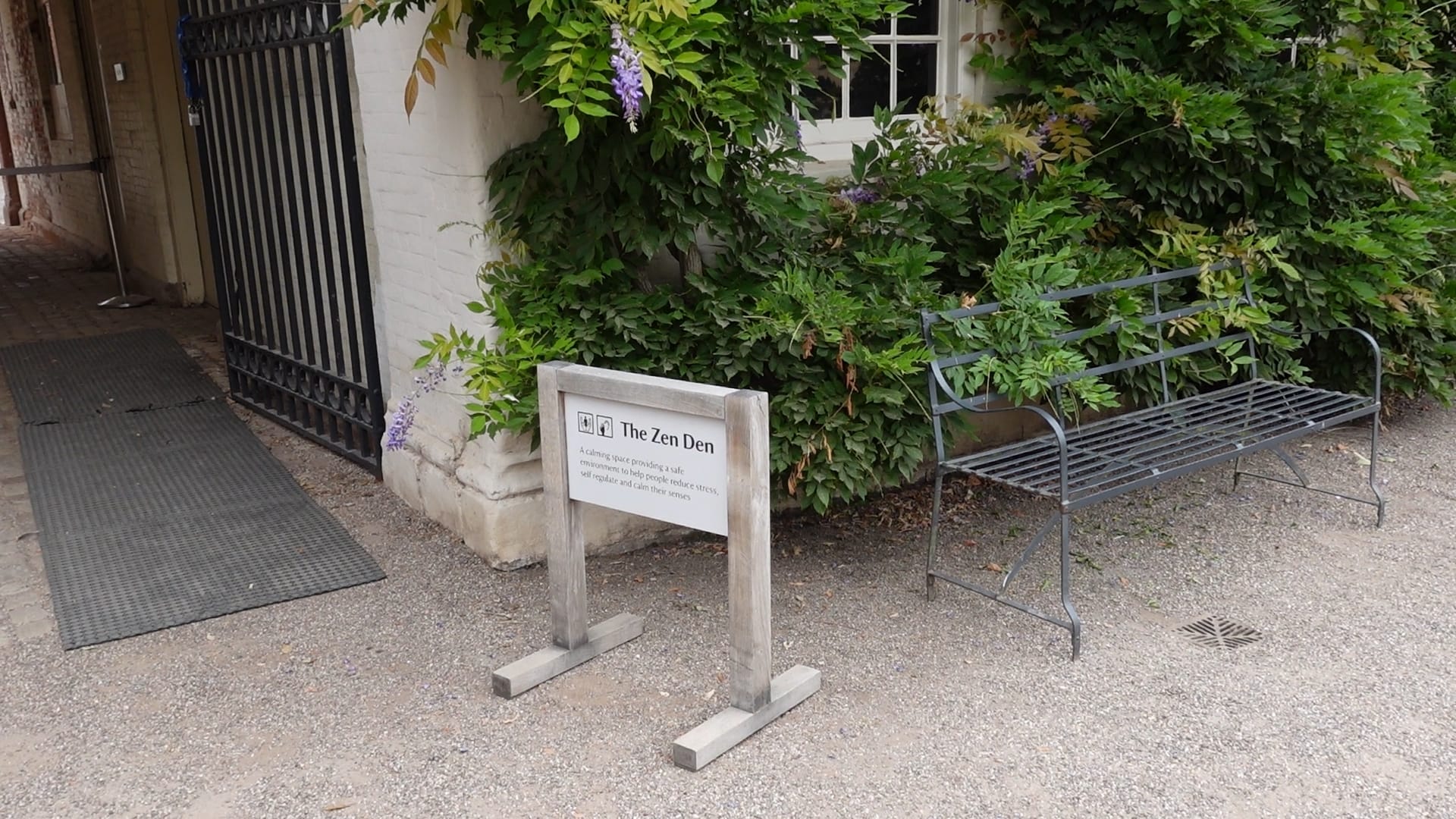
The Zen Den
One accessibility feature we spotted was The Zen Den.
This is a space where somebody who needs to can step away and self-regulate or calm their senses.
For autistic visitors, people with sensory needs or anyone who can become overwhelmed during a busy day out, having somewhere specifically intended for this purpose is a really useful provision.
It's also the sort of facility that can be easy to miss unless you know it's there.
Accessibility at Shugborough – our experience
The biggest accessibility issue we encountered at Shugborough was straightforward:
distance.
It's a huge estate.
There was plenty of disabled parking when we arrived, and the shuttle between the car park and Mansion is extremely useful if walking long distances is difficult.
We walked from the car park to the Mansion area and then explored from there, but by the time we were ready to leave we'd done enough walking and took the shuttle back.
I'd definitely recommend using it if you need it.
The important limitation is that the shuttle isn't a tour of the estate. It runs between the car park and Mansion. If you want to explore other areas of Shugborough, you're still likely to have some walking to do.
So think about pain, fatigue, stamina and mobility before deciding how much you're going to try to fit into one day.
There is absolutely no need to see everything in one visit.
We certainly didn't.
Other accessibility provision
There are other accessibility facilities at Shugborough that we didn't personally use, so I can't review them from experience.
The National Trust currently lists:
- Accessible parking
- Accessible toilets
- A Changing Places toilet
- Step-free routes around parts of the estate
- Wheelchairs available to borrow
- Pre-bookable mobility scooters/Trampers
- A buggy service between Visitor Reception and the Mansion
- Sensory provision
- Accessibility information and maps
If you need a particular facility, check the current National Trust accessibility information before visiting rather than assuming it will suit your individual needs.
We also didn't go inside the Mansion on this visit, so I can't give you a personal assessment of its accessibility.
Food and drink
There are several places to get something to eat or drink.
We saw Park Farm Café near the beginning of our visit, and there's also a Mansion Tea-room near the Mansion.
Having facilities at different points around such a large estate is definitely useful – because going back to the entrance because somebody wants a cup of tea could otherwise become quite an expedition!
As always, check opening times before visiting because individual cafés and buildings may have different hours from the wider estate.
Toilets
There are toilets at several locations around Shugborough, including accessible facilities.
The National Trust currently lists toilet and baby-changing facilities at Park Farm, the Plant Centre and Midden Yard, as well as a Changing Places facility.
Again, because the estate is so spread out, I'd take notice of where the facilities are when you arrive – particularly if somebody in your party may need quick access to a toilet.
Did we see everything at Shugborough?
Not remotely.
Before we visited, I wasn't actually convinced we'd get that much footage.
That turned out not to be a problem.
Shugborough is so large that there was far more left unseen than we actually managed to see.
We didn't explore the Mansion, Patrick Lichfield's apartments were closed, and there are walks, monuments, gardens and other areas of the estate that we didn't get anywhere near.
So there will definitely have to be another visit.
Possibly more than one.
Is Shugborough worth visiting?
We enjoyed Shugborough and were surprised by just how much there was to see.
The servants' quarters were particularly interesting, the Tower of the Winds was unusual, and there was a good mixture of history, gardens and open space.
From an accessibility point of view, I was pleased to see facilities such as the Zen Den and the shuttle service.
But the single biggest piece of advice I would give anybody planning a visit is:
Do not underestimate the size of Shugborough.
If walking, pain, fatigue or stamina are an issue, plan your day. Decide what you really want to see. Use the shuttle where you can.
And don't worry if you can't fit everything in.
Neither could we.
One important note if you're visiting after us
We visited Shugborough in August 2026.
The National Trust is currently making major changes to the visitor facilities, including relocating the main entrance, car park and Visitor Welcome area. The new facilities are expected to open in autumn 2026.
That means the arrival and parking arrangements described in this blog may be different if you're reading it after the changes have taken place.
Always check the latest visitor information before travelling.
Watch our Shugborough Estate video
Want to see what our day was actually like?
You can watch our full Shugborough Estate video below, including the Tower of the Winds, our very long walk towards the Mansion, servants' quarters, Victorian kitchen, Zen Den – and, of course, John attempting to establish the age of a National Trust deckchair.
Planning your own day out? See our full UK carer ticket and disabled admission directory — carer policies, disabled parking and access notes for every place we have reviewed.