A Very Different Country House – Our Day at Sudbury
Country houses aren't usually places where you're encouraged to play with pirate ships, investigate old toys or discover a Dalek lurking amongst the exhibits, but The Children's Country House at Sudbury isn't a typical country house.

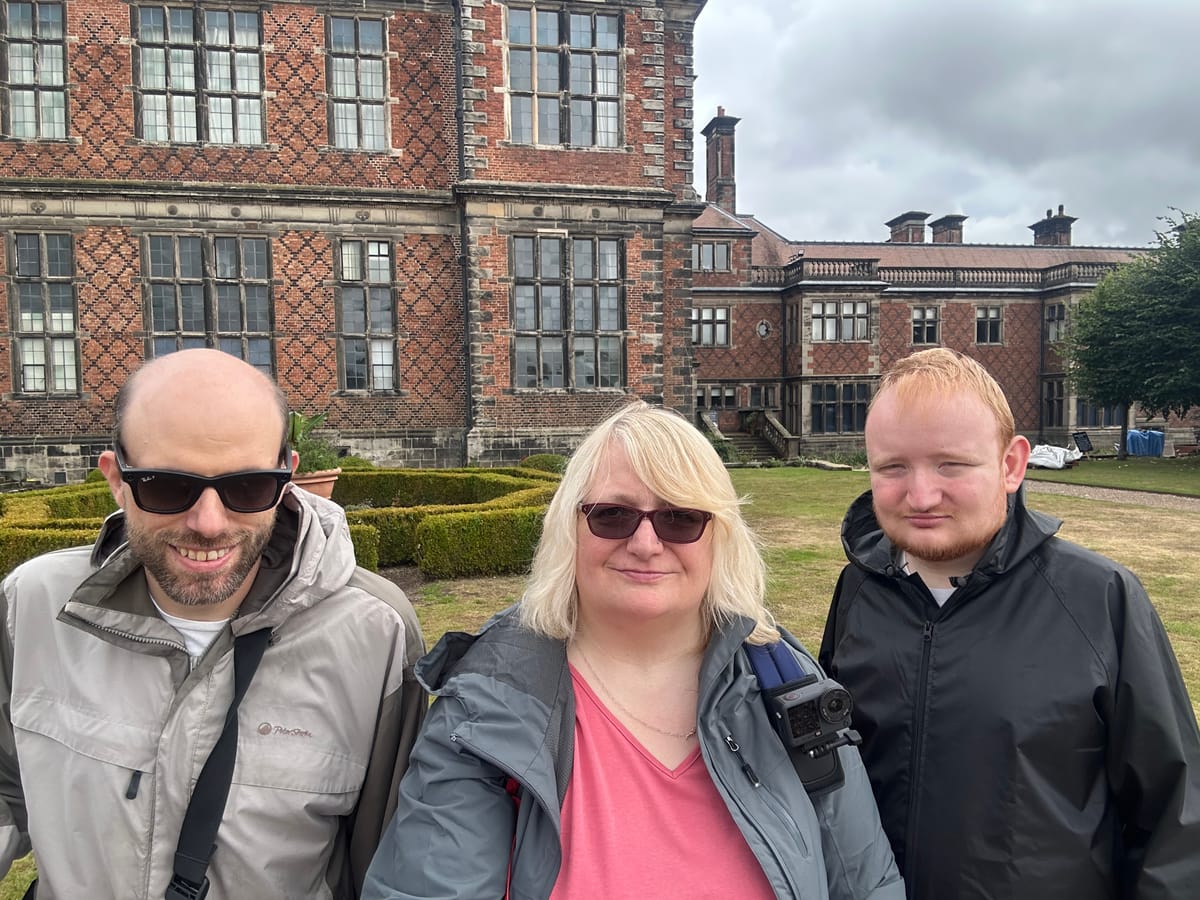
Country houses aren't usually places where you're encouraged to play with pirate ships, investigate old toys or discover a Dalek lurking amongst the exhibits, but The Children's Country House at Sudbury isn't a typical country house.
It's another National Trust property, and having recently joined, we're determined to make good use of our membership. So, despite a rather wet start to the day, we headed to Sudbury in Derbyshire to see what we could find.
Prices: Adult £22 (£24.20 with Gift Aid); child aged 5–17 £11 (£12.10 with Gift Aid); family (two adults, up to three children) £55 (£60.50 with Gift Aid); one-adult family £33 (£36.30 with Gift Aid); under-fives and National Trust members free. Parking is also free.
Parking: The car park is around 460 metres from Visitor Services, with 20 designated disabled spaces (per the National Trust) and larger-than-standard bays throughout. Archie, a free wheelchair-accessible electric vehicle, runs between the car park and the property with no pre-booking needed.
Toilets: Accessible toilets are available, including a Changing Places toilet in the Stableyard.
Mobility: A ramp beside the entrance steps gives step-free access to the ground floor. The Children's Museum and café are newer and have lifts to all levels, but the historic Hall itself is step-free on the ground floor only — the upper floor and basement are reached by stairs, with no lift, and there are cobbles and areas of uneven ground in places. Wheelchairs can be borrowed.
Sensory: There's a sensory room in the Children's Museum — a quiet space to step away from noise and activity.
Visual impairment: Braille and large-print guides are available for the museum.
Prices and policies as we found them on our visit — always check with the venue before you go.
Getting from the car park
The car park is some distance from the house. We didn't notice any designated disabled spaces while we were there, although the National Trust says that there are 20 designated spaces for disabled visitors in the main car park.
What we did find was Archie!
Archie is the wheelchair-accessible electric vehicle used to transport visitors between the car park and the property. It's a free service and meant that we didn't have to start and finish our visit with the walk between the two.
John couldn't resist asking the driver, "Mr Driver, am I to guess your name isn't Archie?"
It wasn't. His name was Richard!
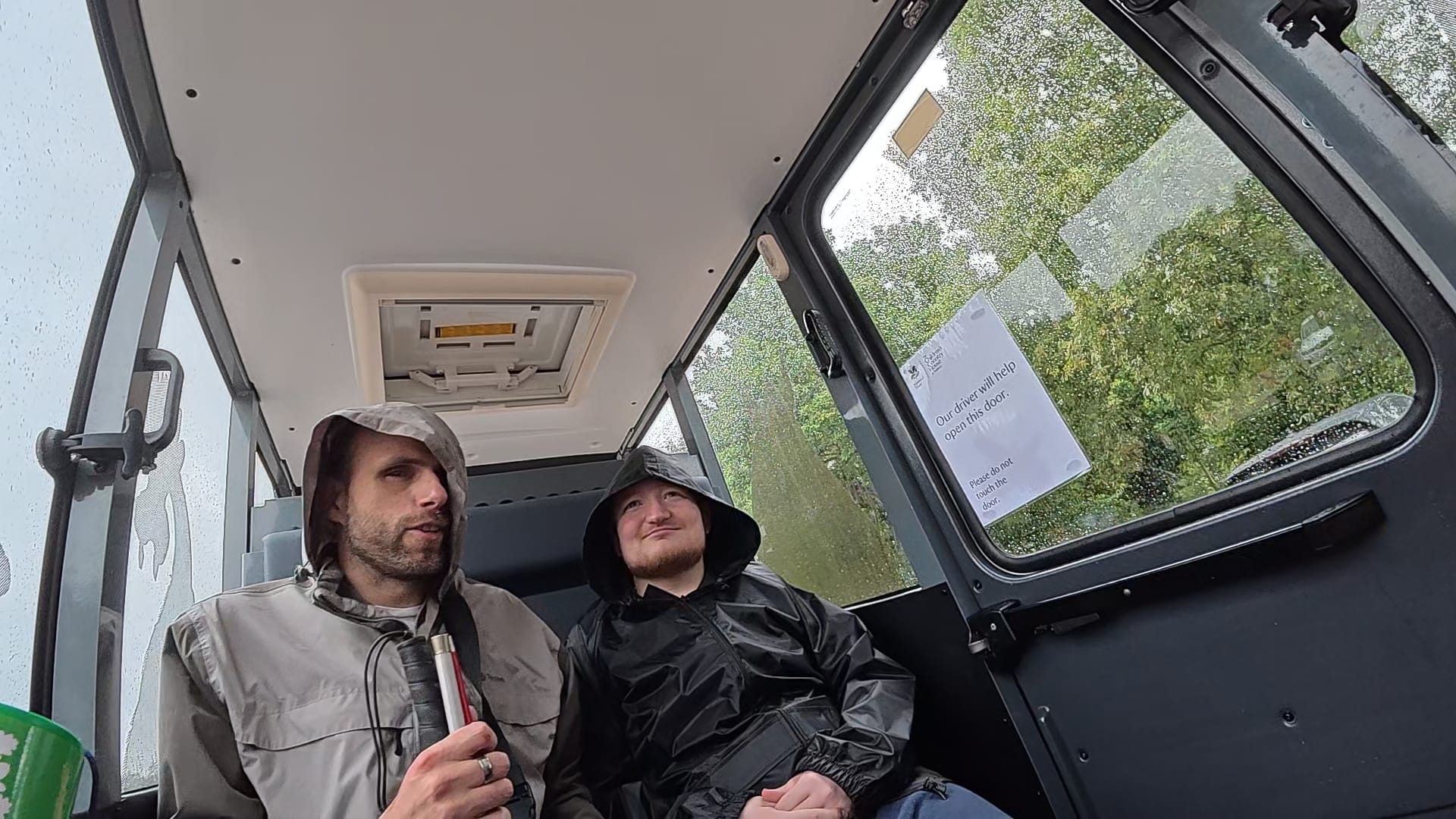
Archie became even more useful at the end of our visit. On the return journey, Richard asked where we'd parked. Rather than simply dropping us back at the normal stop, he drove through the car park and deposited us literally in front of our van.
That was a lovely bit of extra help at the end of the day.
The Children's Museum
We used our National Trust membership to get in and started our visit in the Children's Museum.
One of the first things we found was a sensory room: a quiet space where people can get away from some of the noise and activity around them. Nobody was using it when we arrived, so we were able to have a quick look inside.
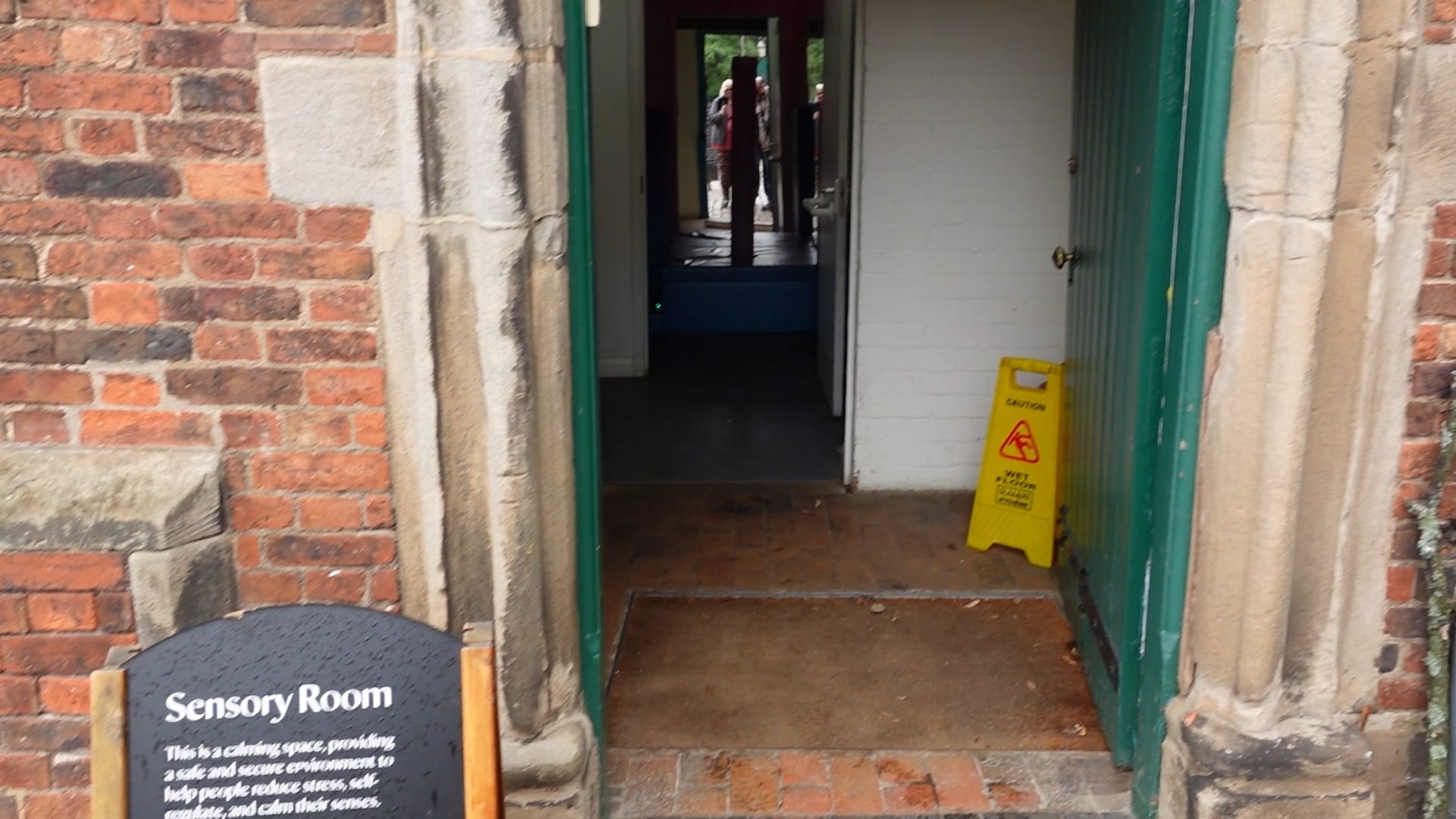
The museum explores childhood through different periods, but it isn't simply a collection of things sitting behind glass. There are plenty of things to investigate and play with too.
One of the first things to catch our attention was an antique Galloper. This was no ordinary rocking horse. It had a lever with three different settings: ROCK, GALLOP and HUNT.
I'm not sure modern rocking horses offer quite the same level of choice!
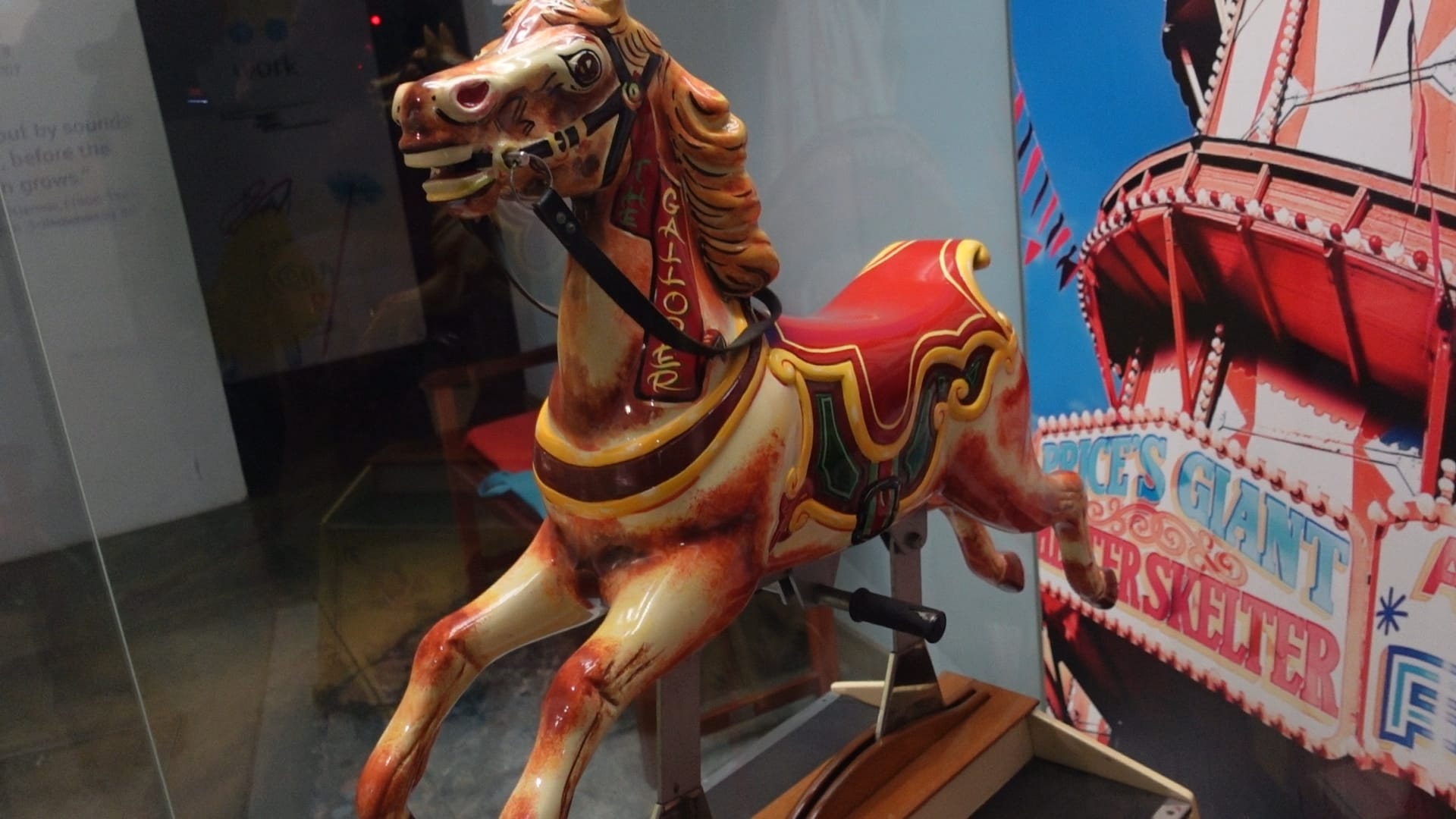
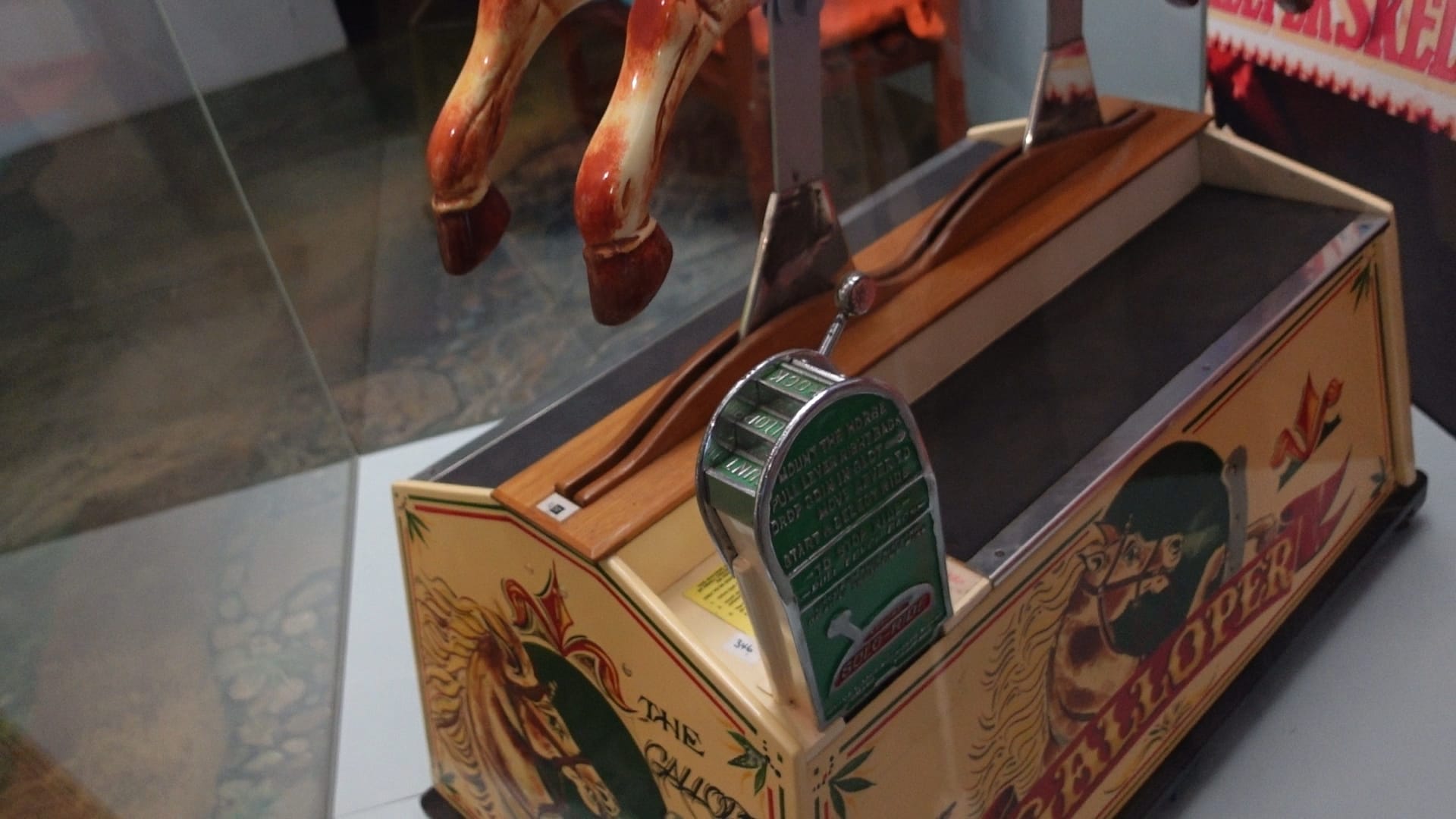
On the left: The Galloper. On the right: The lever with the different settings
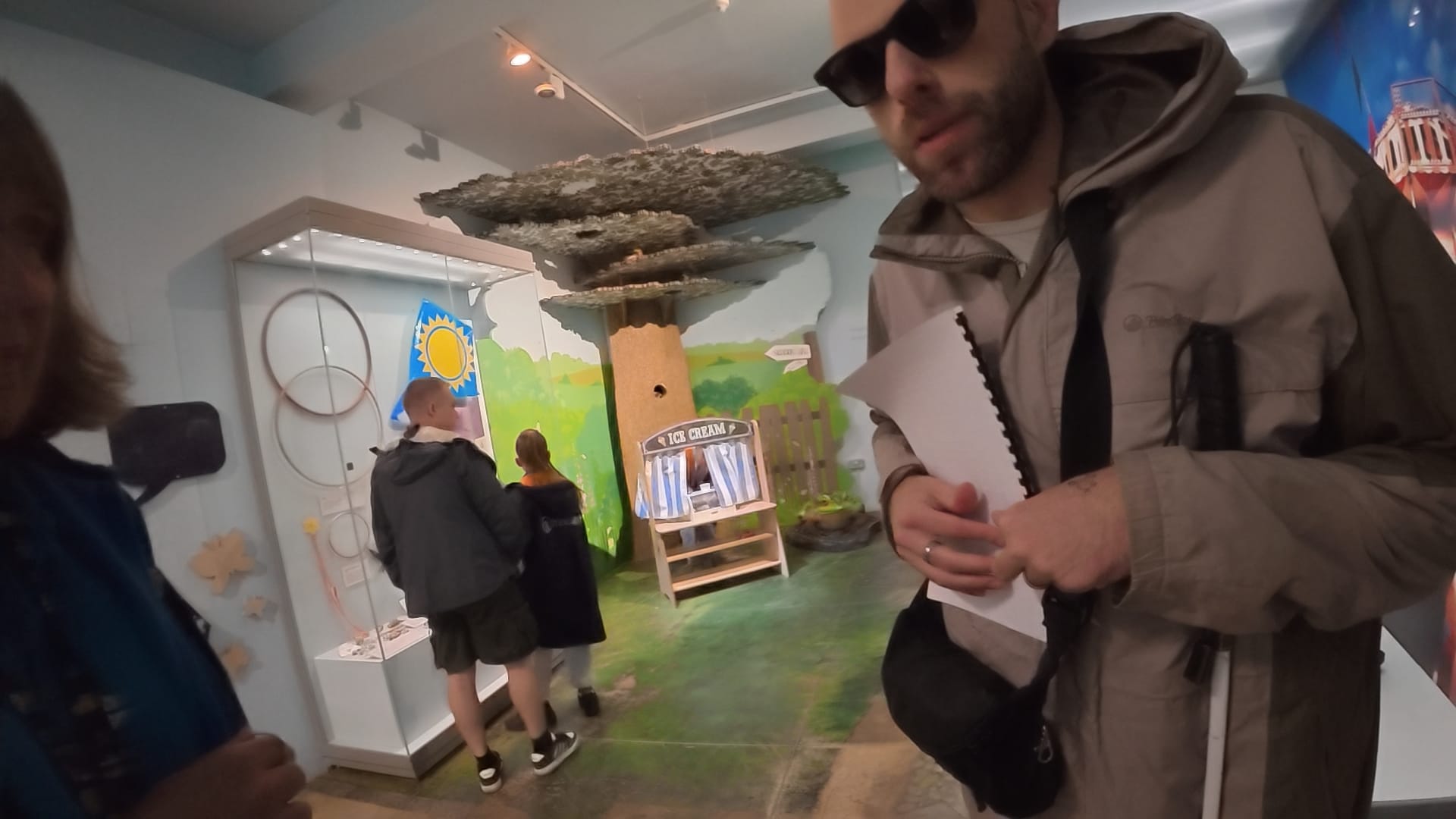
John was also given a Braille guide to the museum. Although the guide had apparently hardly been used, some of the Braille had already become squashed, making it more difficult for him to read.
I suggested using Braillon, which is more durable and doesn't squash in the same way. It was the same suggestion I'd made when we visited Biddulph Grange, where we'd encountered a similar problem. The volunteer said she would feed the suggestion back.
What particularly impressed John was simply that the Braille guide existed. As he pointed out, it would be very easy for somewhere to decide that because something isn't used very often, it isn't worth providing.
The volunteer's response was simple:
"But we do need one, because everyone's welcome."
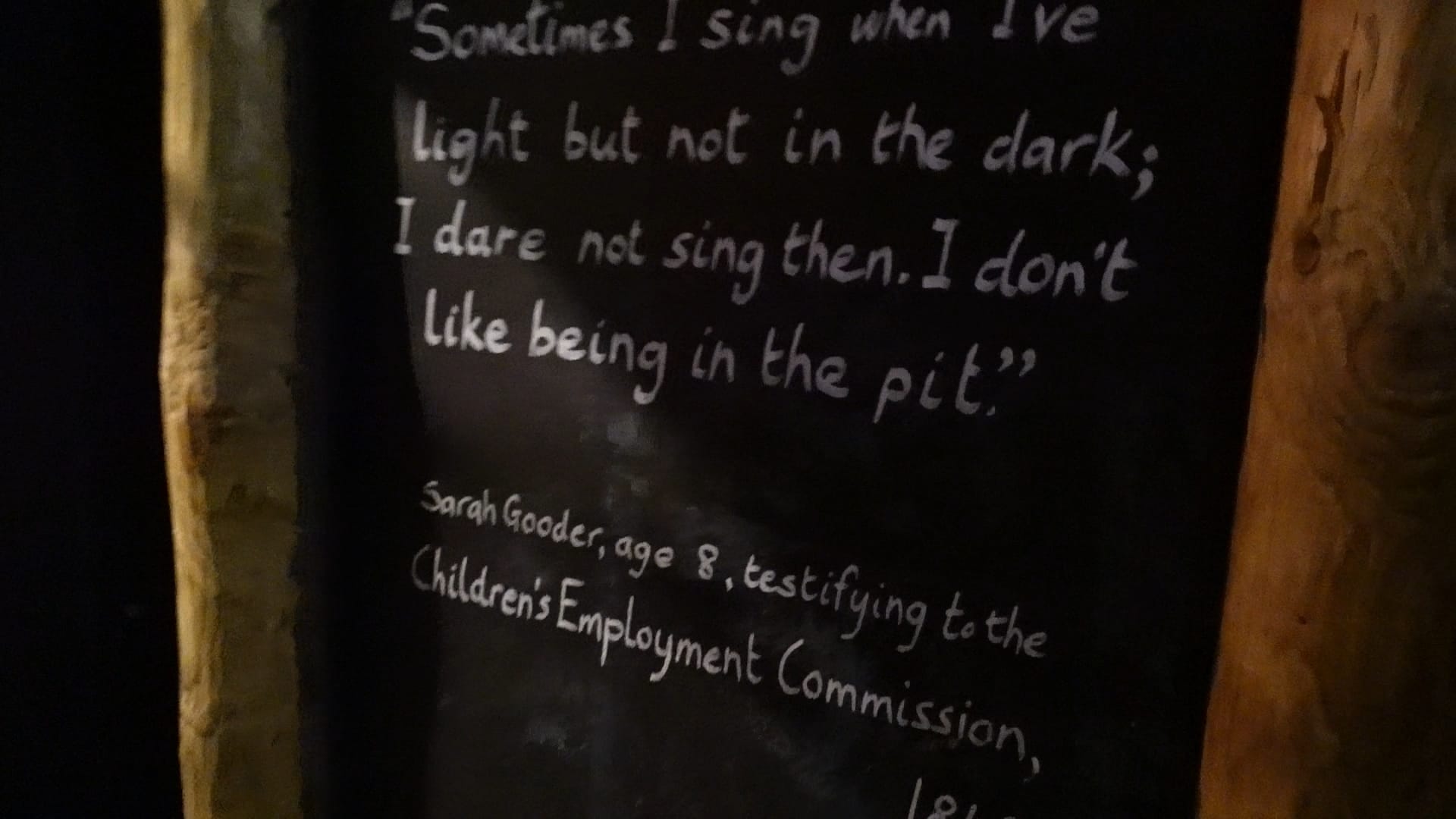
Elsewhere in the museum, we walked through a dark recreation of the conditions in which children once worked underground. One display carried the words of eight-year-old Sarah Gooder, who gave evidence about working in a coal mine in the 1840s.
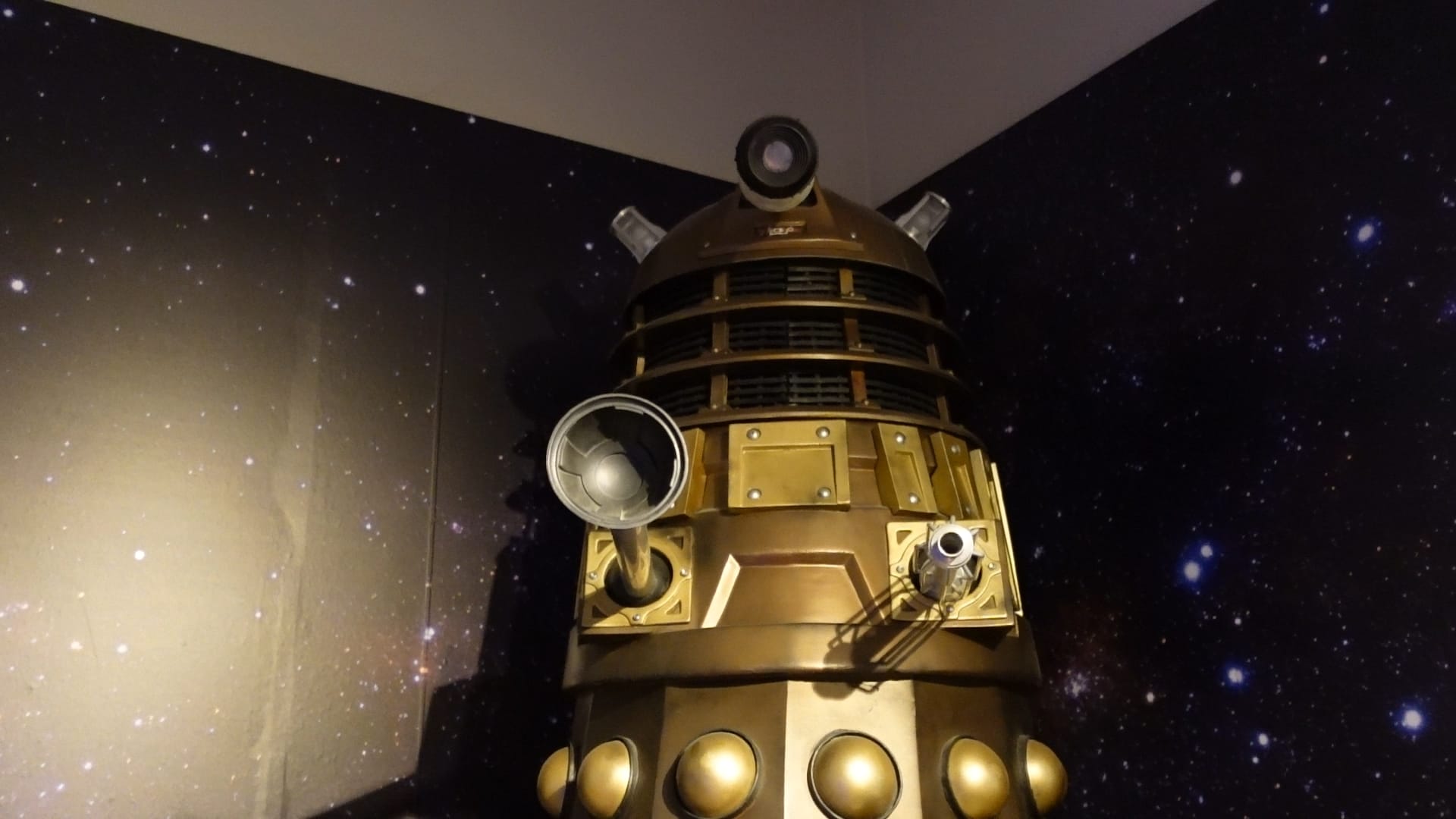
It was quite a contrast when the next thing we encountered was a full-size Dalek.
"Friend of yours here, John?"
"Who's my friend?"
The Dalek, obviously!
It had what looked remarkably like a sink plunger on one side and a whisk on the other.
At least it wasn't saying "EXTERMINATE!"
There were plenty more childhood memories and curiosities as we went around. We found BRIO Builder, optical toys and a View-Master – I had one of those – along with automata and other things from different generations.
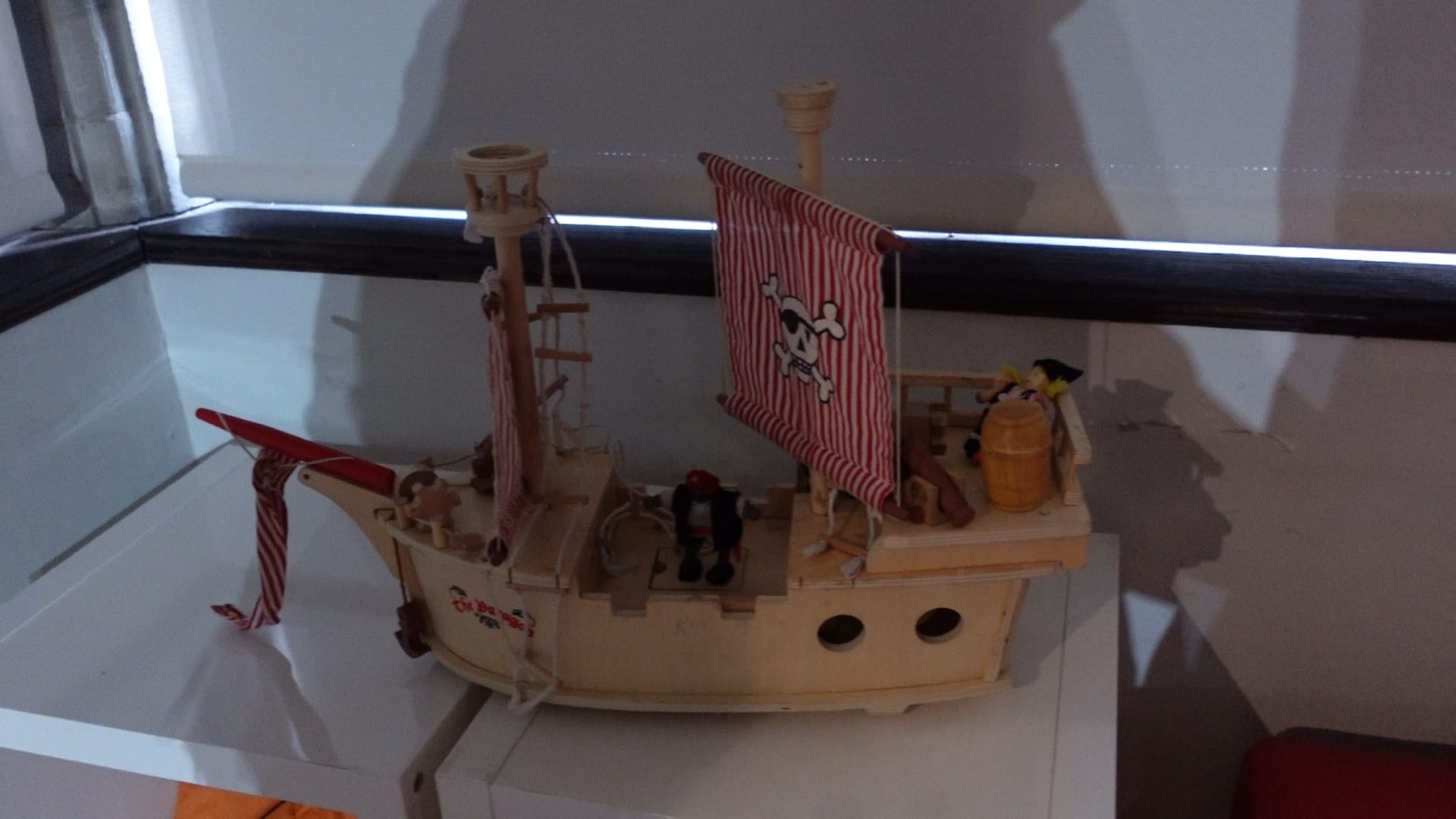
And then John found the pirate ship.
Within seconds, a 6ft 2 man had apparently been replaced by a small child.
"Ahoy me matey! It's the pirates! Arrgh! Time to storm the seven seas! Swab the poop decks! Eat fish and chips! Arrgh!"
I'm not entirely sure where fish and chips fit into traditional piracy, but John seemed happy enough with his version.
There was even a model train running on a track high above our heads, which we'd heard before we finally worked out where the noise was coming from.
Did someone mention rain?
We had intended to explore the gardens, but the weather wasn't exactly cooperating.
When we first went outside, it was raining again. John needed his hood up to keep his hearing aids dry, so we decided that exploring the gardens could wait.
Fortunately, the rain did eventually stop and we managed to get outside for a brief wander.
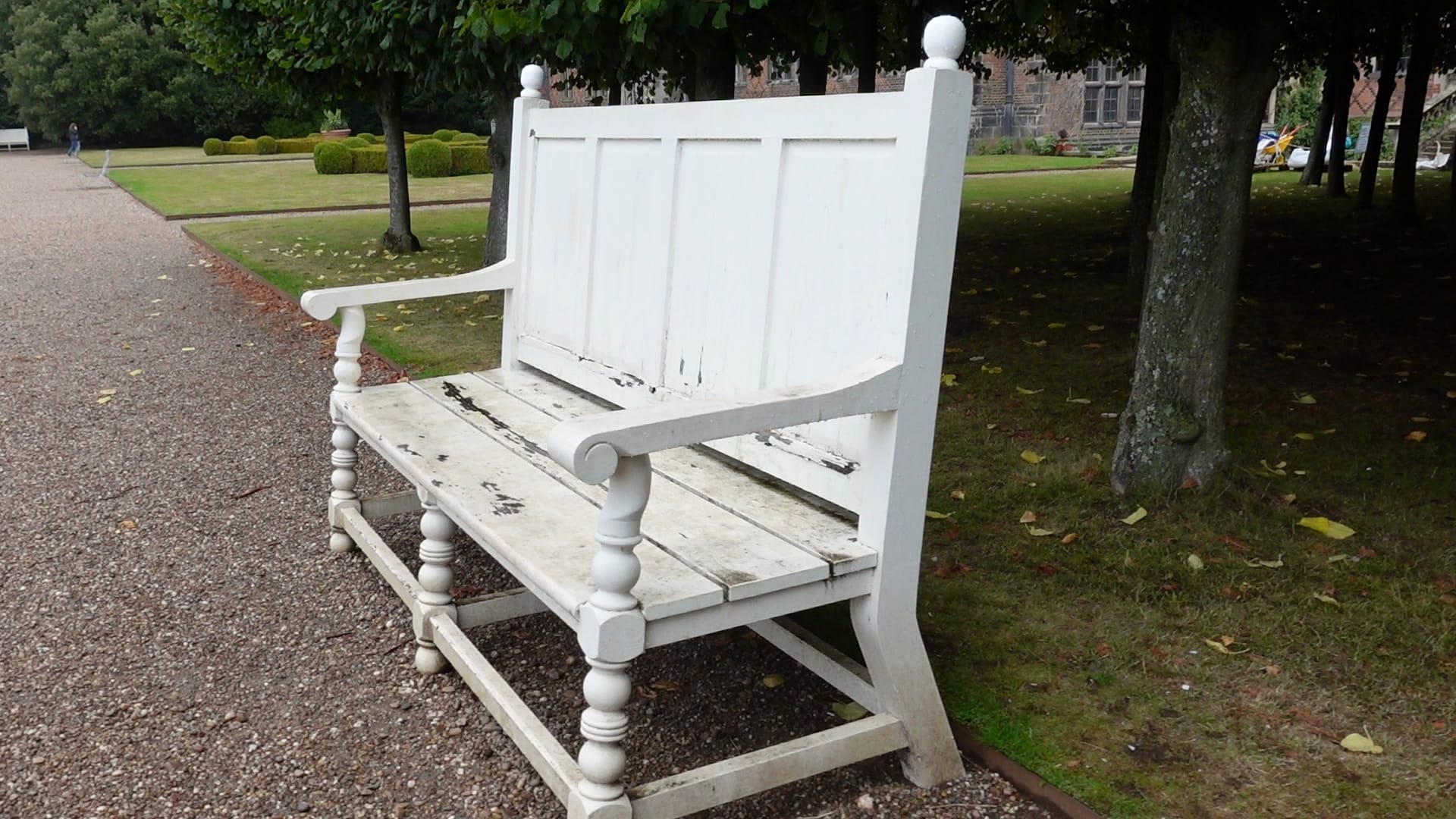
One of the first things we encountered was an enormous white bench.
It was also extremely wet.
We decided against acquiring wet bottoms in the interests of thorough research.
We did at least get a good look at the outside of Sudbury Hall and some of the grounds.
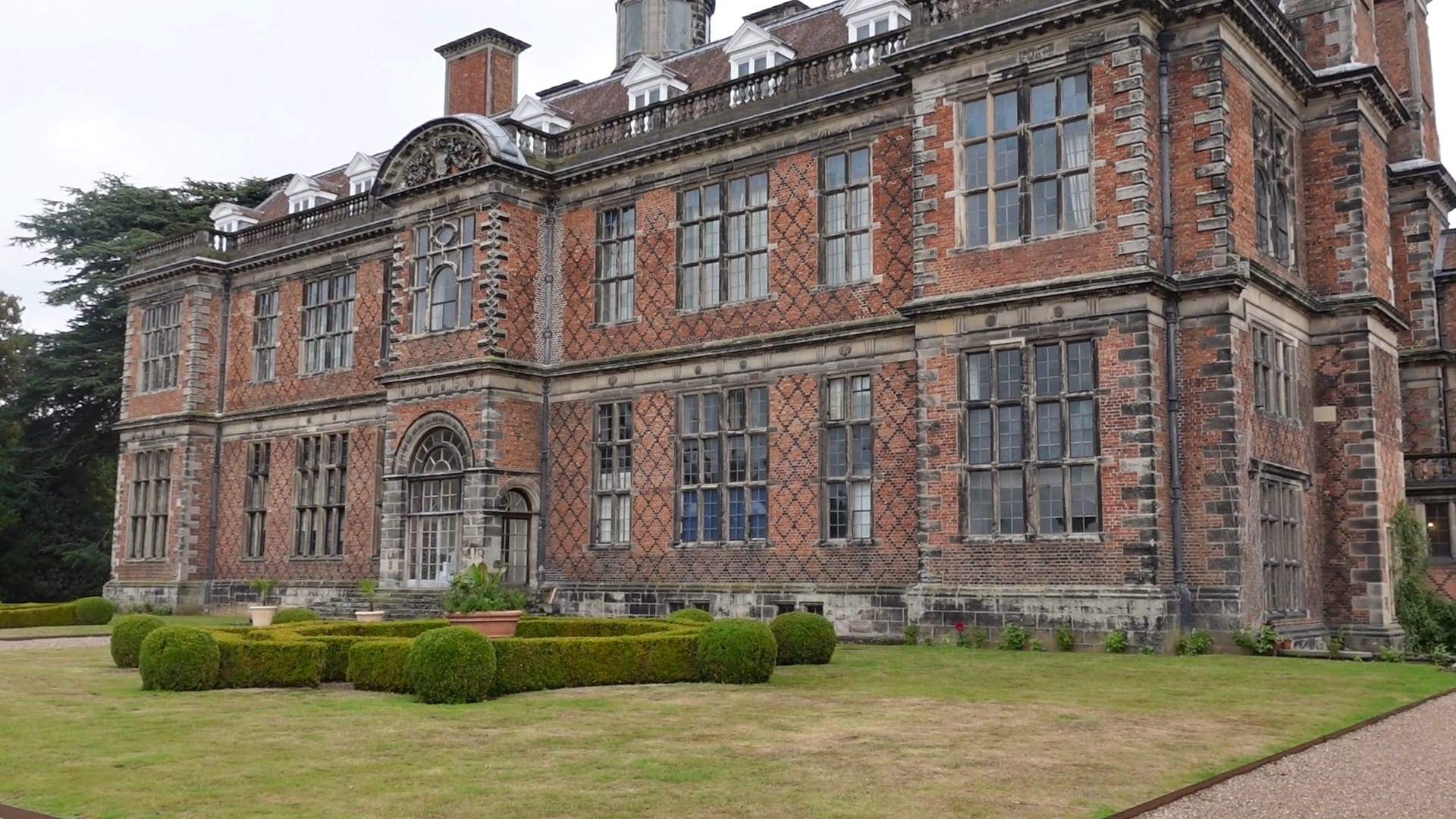
There's considerably more outside than we managed to explore on this visit, so that's something left for another, hopefully drier, day.
Lunch – courtesy of the van
There is a café at Sudbury, with indoor and outdoor seating, and there are picnic benches outside too.
We'd brought a packed lunch with us and would normally have eaten outside, but the weather had other ideas.
So we went back to the van and ate our lunch there instead.
One advantage of bringing your own dining room with you!
Exploring Sudbury Hall
After lunch, it was time to explore the historic house itself.
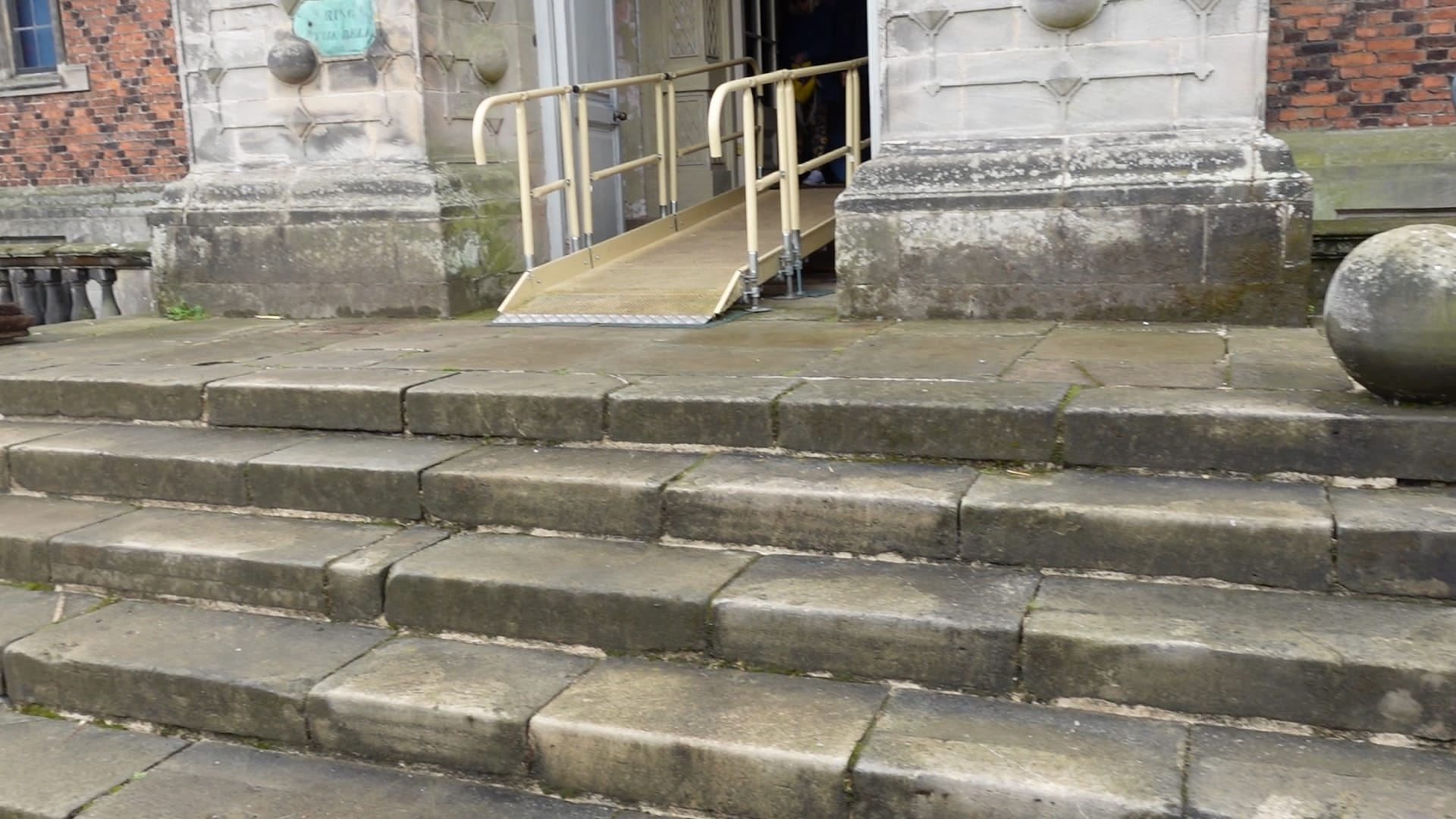
There are steps leading up to the impressive main entrance, but there's also a ramp alongside them providing step-free access to the ground floor.
Inside, one of the first displays we encountered was of Victorian children's clothing, including mourning clothes.
Sudbury also has its own tartan, which we found displayed on a loom.
Then we reached the Grand Staircase.
It really is grand, with elaborate carving and paintings surrounding the staircase and above your head.
John had a question.
"Can you feel the carving there?"
Well, yes.
"If you put yourself on stilts you can feel it, yeah!"
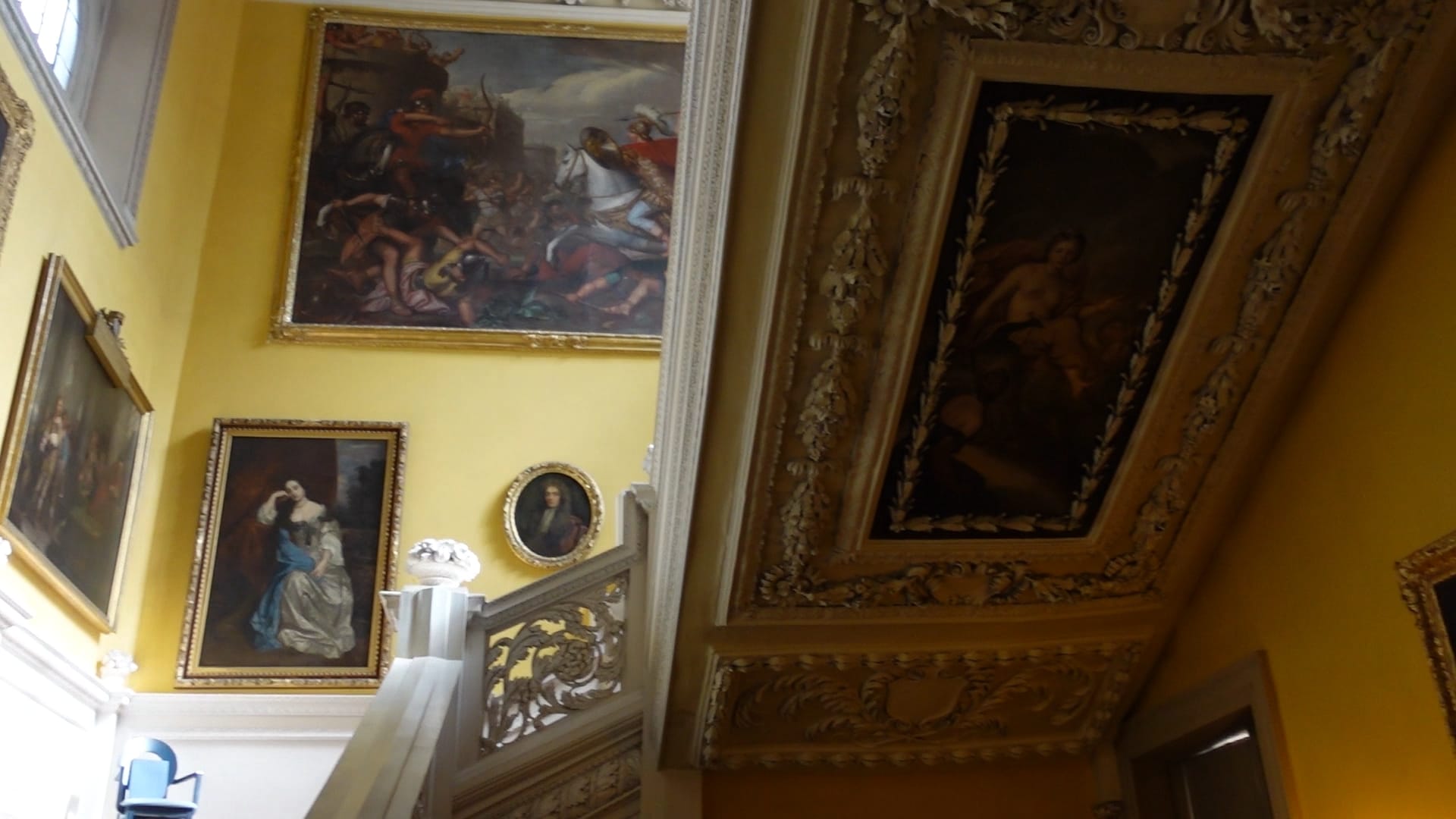
There are plenty of reminders throughout the house that this is the Children's Country House. Alongside the historic interiors we found things such as a colourful world map rug, books and activities.
Then there was the Long Gallery.
It was, indeed, long.
Sometimes there's really not much more you can add.
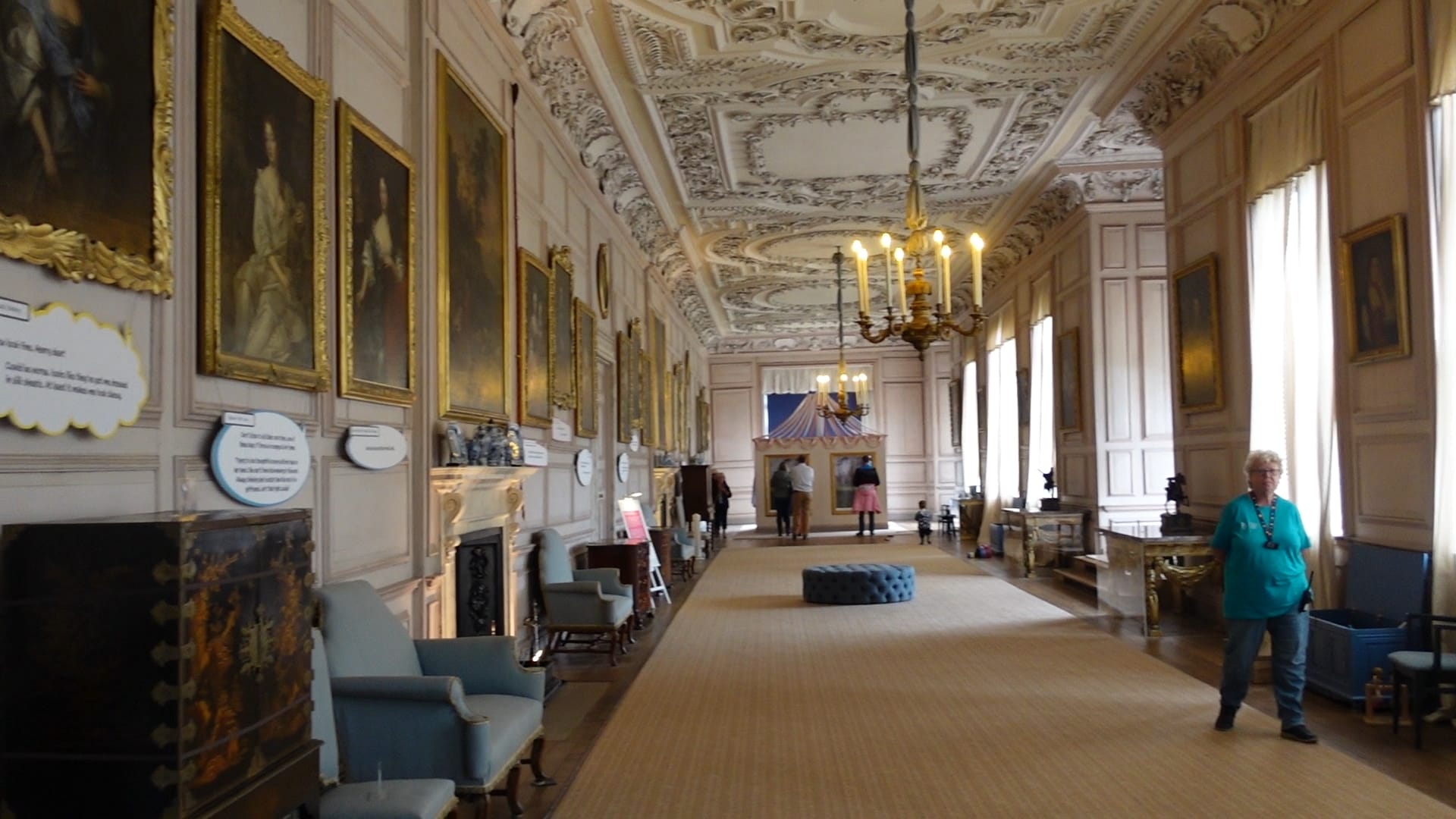
One of the volunteers explained that the house deliberately has a less pompous feel than you might expect from a country house. Children are welcome here, and that comes across throughout the visit.
Queen Adelaide's bedroom was rather more elaborate, with its four-poster bed and rich decoration.
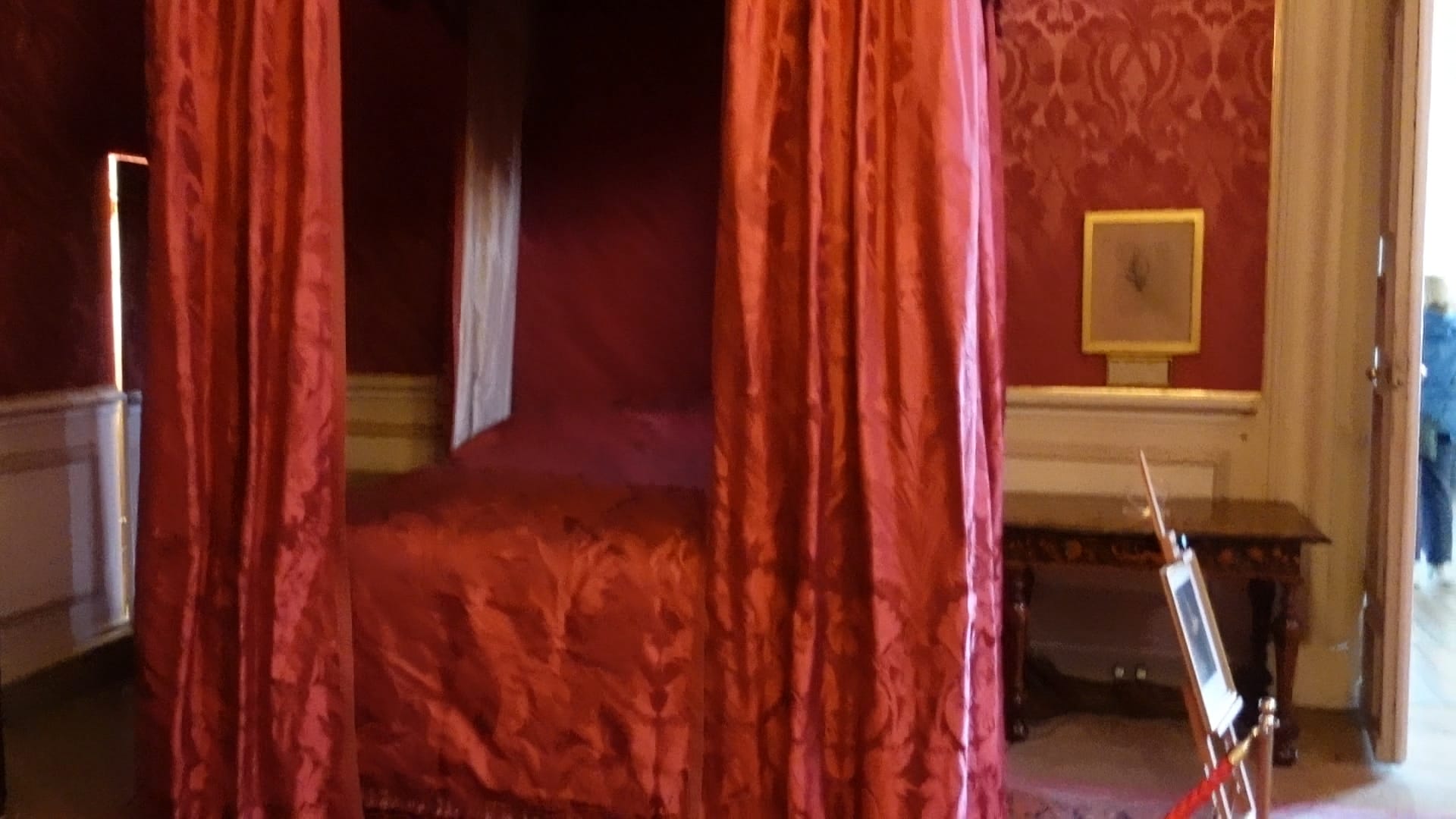
Down to the kitchens
Eventually we made our way downstairs, where things became rather less grand.
We found the Pantry of Destruction before exploring the historic kitchen and pantry, complete with an old cooking range, kitchen equipment and all sorts of things that would once have been part of everyday life below stairs.
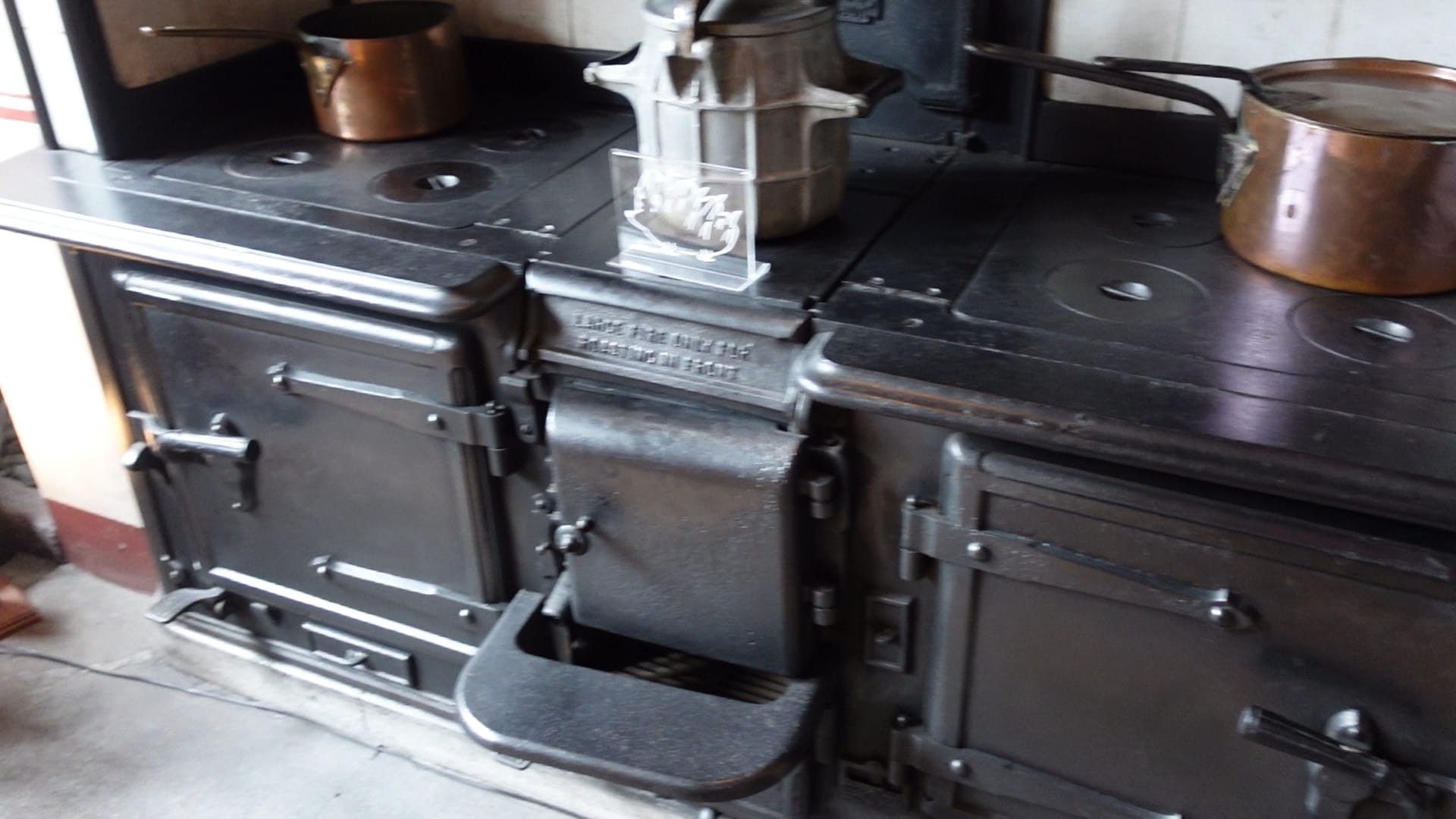
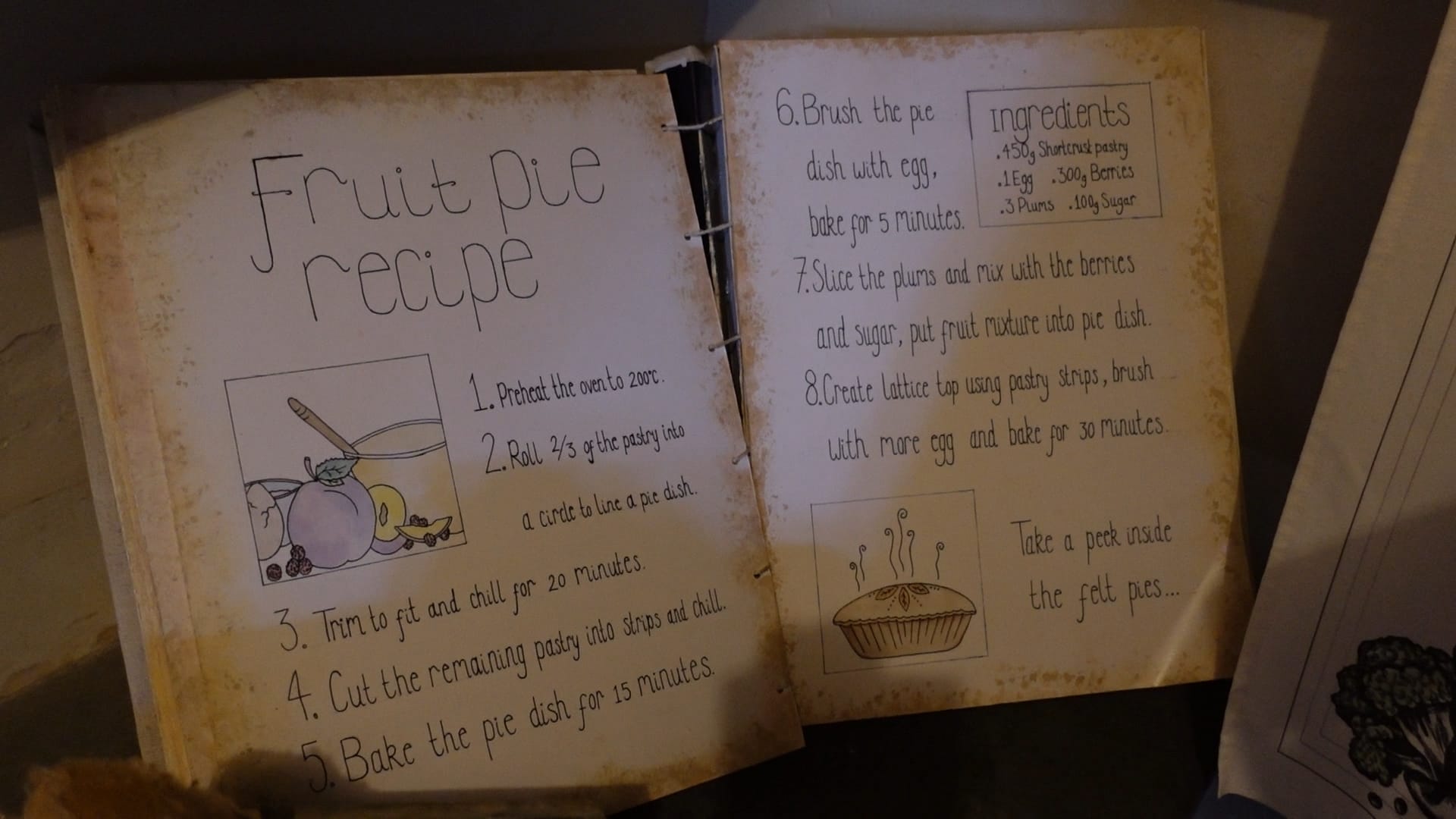
George found a fruit pie recipe and promptly took a photograph of it on his phone.
"Are you dropping a hint?"
I suspect I may find out eventually.
How accessible is The Children's Country House at Sudbury?
We didn't notice designated disabled parking when we arrived, but according to the National Trust there are 20 designated disabled spaces in the main car park. The rest of the parking spaces are also larger than standard spaces.
The car park is around 460 metres from Visitor Services, which makes Archie particularly useful. The wheelchair-accessible electric vehicle provides a free transfer between the car park and the property, and you don't need to pre-book it.
On our visit, it worked extremely well – particularly when Richard took us right back to the van at the end.
There are accessible routes around the museum and café, into the gardens and through the ground floor of the Hall. The museum and café have lifts.
Accessible toilets are available, including a Changing Places toilet in the Stableyard, and wheelchairs can be borrowed. There are also Braille and large-print guides.
The historic nature of the property does mean there are cobbles, steps and areas of uneven ground in places.
For us, one of the most memorable accessibility moments wasn't a ramp or a lift, though. It was that simple response when we were talking about the Braille guide:
"But we do need one, because everyone's welcome."
That attitude matters too.
How much does Sudbury cost?
We used our National Trust membership, so admission was included for us.
At the time of writing, standard admission to Sudbury Hall, Museum and Garden is:
- Adult: £22 (£24.20 with Gift Aid)
- Child aged 5–17: £11 (£12.10 with Gift Aid)
- Family – two adults and up to three children: £55 (£60.50 with Gift Aid)
- One-adult family – one adult and up to three children: £33 (£36.30 with Gift Aid)
- Under-fives: free
- National Trust members: free
Parking is also free.
As always, prices and opening arrangements can change, so check the National Trust website before making a special journey.
So, what did we think?
The Children's Country House at Sudbury really is a very different sort of country house.
There's still plenty of history. You can explore the grand rooms of Sudbury Hall, see the staircase, Long Gallery, bedrooms, kitchens and collections.
But alongside all of that, you're encouraged to investigate and play.
There are things to touch, things to try and things that prompt conversations about childhood past and present. And if you're a 6ft 2 blind man who suddenly feels the need to become a pirate, apparently that's fine too.
The weather meant we didn't see nearly as much of the gardens as we might have liked, which gives us a good excuse to go back another time.
Preferably when it isn't raining!
🎬 Watch our full visit to The Children's Country House at Sudbury on YouTube:
Planning your own day out? See our full UK carer ticket and disabled admission directory — carer policies, disabled parking and access notes for every place we have reviewed.